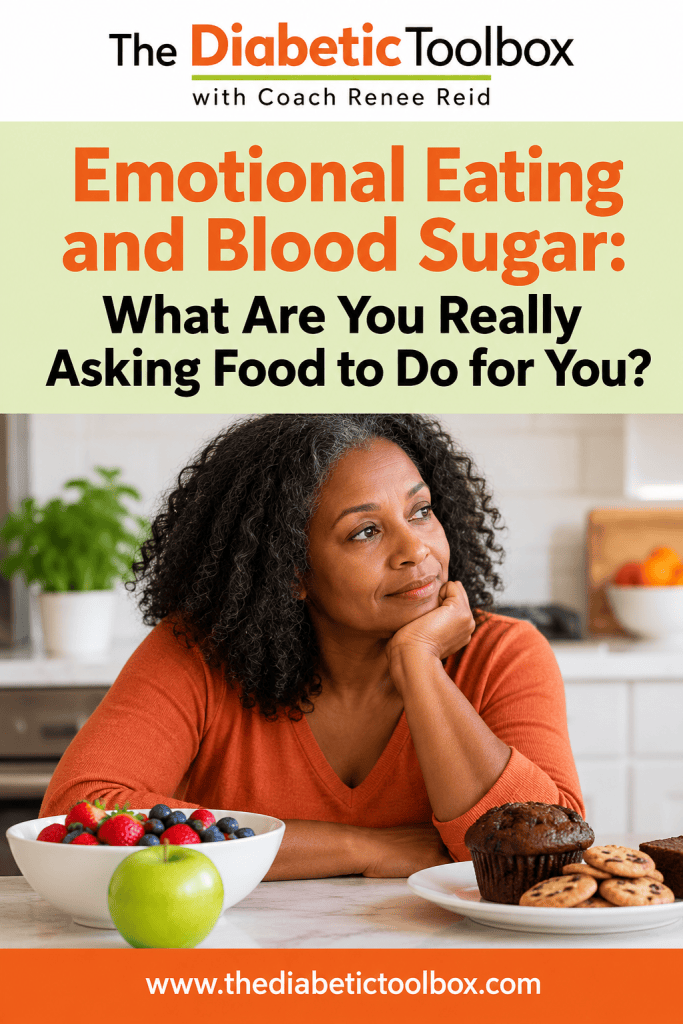
What if the biggest challenge with managing your blood sugar isn’t what you’re eating, but what you’re asking your food to do for you? Think about it. We ask an awful lot of our food, don’t we? It has to taste good, be nutritious, fit into our budget, and be easy enough to prepare after a long day. And if you’re managing prediabetes or type 2 diabetes, it also has to be blood sugar friendly. But that’s not all.
We want food to make us feel good. We want it to comfort us when we’re sad, calm us when we’re anxious, celebrate our victories, heal our hurts, and occasionally make a difficult day feel a little brighter. That’s a pretty big job for a plate of food! And while there’s nothing wrong with enjoying a comforting meal or celebrating with your favorite dessert, what happens when food becomes the first place you turn whenever life gets difficult?
What happens when you’re no longer eating because you’re hungry, but because you’re lonely, overwhelmed, disappointed, exhausted, or just plain tired of dealing with everybody else’s problems? It could be that, like me, you’re an emotional eater.
Hello everyone, and welcome to The Diabetic Toolbox, where we are on a mission to end type 2 diabetes one family at a time through education, support, and empowerment.
If this is our first time meeting, my name is Renee. I am an emotional eating and diabetes lifestyle coach and yoga teacher. I help adults over 40 with prediabetes or type 2 diabetes lower their blood sugar, lose weight, and improve mobility without extreme dieting or spending hours in the gym.
Today, we’re talking about emotional eating and blood sugar: what emotional eating actually means, why it can make managing prediabetes or type 2 diabetes harder, and three things you can start doing today to build a healthier relationship with food.
And before we get started, I want you to remember something. You’ve probably heard the saying, “You can’t exercise your way out of a bad diet.” There’s some truth to that. Exercise offers tremendous health benefits, but it doesn’t erase every consequence of our eating habits.
However, I don’t want you walking away from today’s conversation believing that you have to get your food, your mindset, and your movement habits under control all at once. That’s a lot to ask of yourself, especially when you’re already managing a chronic health condition. We’re going to start by understanding what’s happening and then look at a few practical ways to respond differently.
1. What Is Emotional Eating, and How Do You Know If You’re Doing It?
Let’s start with something important. Eating is an emotional experience, and that’s not necessarily bad. Think about your favorite family holiday meal. The smell of your grandmother’s sweet potato pie, the Sunday dinners when everyone gathered around the table, or that special dish your mother made whenever you weren’t feeling well. I can still remember how excited I got everytime my mom made her famous meatloaf, mash potatoes and gravy, green beans and biscuits. Wow! My brothers and I would eat without talking, our eyes and stomachs fixed on our plates. Food connects us to people, places, memories, and traditions. The concern begins when eating becomes one of your primary ways of dealing with uncomfortable emotions, even when your body isn’t physically hungry.
Emotional eating is eating in response to feelings rather than primarily in response to physical hunger.
And those feelings aren’t always negative. You might eat because you’re celebrating a promotion, enjoying a family gathering, or rewarding yourself for finishing a difficult project. But emotional eating can also show up when you’re frustrated, worried, bored, lonely, or emotionally exhausted. Let me give you an example.
You’ve had a difficult day at work. Your supervisor was demanding, your coworkers weren’t particularly helpful, and by the time you get home, you’re irritated and exhausted. You’re not really hungry because you ate dinner an hour ago. But you find yourself standing in front of the refrigerator, looking for something. You grab a piece of cake, a handful of chips, or a bowl of ice cream. For a few minutes, you feel better.
The problem is that the situation that upset you hasn’t changed. You’re still frustrated, and now you might be disappointed with yourself for eating when you weren’t hungry. Sound familiar? It certainly does to me. One of the most helpful things I’ve learned about emotional eating is that the food isn’t always what we’re looking for. Sometimes we’re looking for relief from whatever we’re feeling.
How can you recognize emotional hunger?
Physical hunger usually develops gradually. You might notice your stomach growling, your energy dropping, or that several hours have passed since your last meal. Emotional hunger can feel different. It may appear suddenly, especially after a stressful conversation or disappointing experience. You might crave one particular food, continue eating after you’re comfortably full, or find yourself searching the kitchen without knowing what you want.
These aren’t foolproof signs. Physical hunger can also feel urgent, particularly if you’ve gone too long without eating. But noticing what happened immediately before you reached for food can give you valuable information. And that brings us to an important question.
2. Why Emotional Eating Can Make Blood Sugar Management More Difficult
If you’re managing prediabetes or type 2 diabetes, emotional eating deserves your attention because it can influence your food choices, eating patterns, and blood sugar levels. Let’s say you’ve planned a balanced dinner with baked chicken, roasted vegetables, and brown rice. But after an upsetting telephone conversation, you decide you’re too frustrated to cook. Instead, you order a large pizza, eat several slices, and finish the evening with cookies.
Now, eating pizza or cookies doesn’t automatically mean you’ve done something harmful. People with diabetes can enjoy a variety of foods. The challenge is when emotionally driven eating repeatedly leads you to eat larger portions than you intended, consume more carbohydrates than your body can comfortably manage, or eat when you’re already satisfied.
Carbohydrates are broken down into glucose, which enters your bloodstream. The amount of carbohydrate you eat, along with factors such as medication, activity, sleep, and individual insulin response, influences what happens to your blood sugar afterward. When you’re managing diabetes, repeated episodes of eating beyond your body’s needs can make glucose management more difficult.
Stress can affect your blood sugar, too.
Here’s something else worth understanding. When you’re stressed, your body releases hormones, including cortisol and adrenaline, that help you respond to a perceived challenge. Those hormones can also increase blood glucose by encouraging your body to release stored energy.
For someone with prediabetes or type 2 diabetes, that response can complicate blood sugar management. Now imagine you’re experiencing stress, your blood sugar is already responding to that stress, and you’re also eating foods in amounts that cause a substantial glucose rise.
You can see why managing emotional eating is about much more than willpower.
It’s also important to recognize that not everyone responds to stress by eating more. Some people lose their appetite, skip meals, or experience unpredictable glucose changes. If you take insulin or certain diabetes medications, unusual hunger or irritability can sometimes signal low blood sugar. Check your glucose when appropriate rather than assuming every urge to eat is emotional.
Can you improve your blood sugar through lifestyle changes?
Absolutely. Balanced meals, regular physical activity, adequate sleep, stress management, and appropriate medical care can all support healthier glucose levels. But improving your eating habits becomes much easier when you understand why you’re eating in the first place.
3. Why We Keep Turning to Food When Life Gets Difficult
I want to spend a little time here because I think this is where many of us need to begin. For some of us, food has been a source of comfort since childhood. When we were sad, someone gave us a cookie. When we were sick, someone made our favorite soup. When we accomplished something special, the family celebrated with a wonderful meal. And there’s nothing inherently wrong with those experiences.
But somewhere along the way, we may have learned to reach for food whenever we needed comfort, encouragement, or a break from our responsibilities. I also think this can be especially relevant for adults who have spent years taking care of everyone else. You’ve worked all day, cared for children, supported aging parents, managed a household, and tried to make sure everyone had what they needed.
And when the day finally belongs to you, what do you do? You sit down with your favorite snack because, quite frankly, it’s one of the few things you’ve done for yourself all day. I understand that. But here’s the question I want us to consider.
Are you enjoying the food, or are you asking the food to give you something you’re not getting anywhere else?
Maybe you need rest. Maybe you need someone to listen. Maybe you’re feeling unappreciated, and food has become your reward for making it through another demanding day. Or perhaps you’re dealing with grief, loneliness, anxiety, or disappointment that you haven’t had an opportunity to address.
Food can provide temporary pleasure and comfort, but it cannot resolve an ongoing conflict, repair a difficult relationship, or give you the emotional support you’re missing. And if you continue relying on food to manage those feelings, you may find yourself caught in a frustrating cycle. You feel upset, you eat to feel better, you experience temporary relief, and then the original feelings return.
Sometimes guilt or worry about your blood sugar gets added to the mix. That can leave you feeling worse than you did before you started eating. This is why I believe emotional eating deserves curiosity rather than criticism. When you begin identifying what you’re feeling and what you actually need, you have more choices about how to respond. And you don’t have to stop enjoying your favorite foods to begin making those changes.
4. Three Things You Can Do Today to Manage Emotional Eating
Now that we’ve talked about what emotional eating is and why it matters, let’s discuss what you can actually do about it. I want to share three strategies that are practical enough to use on a busy Tuesday afternoon, not just when life is going according to plan.
Step 1: Ask yourself what you’re really hungry for.
The next time you head toward the refrigerator or reach for a snack, give yourself a moment to check in.
Ask yourself three questions.
- Am I physically hungry?
- What am I feeling right now?
- What do I need at this moment?
Let’s say you’ve just finished a difficult conversation with your adult child. You’re worried, upset, and feeling helpless. You walk into the kitchen and immediately reach for a bag of potato chips. Before opening the bag, ask yourself whether you’re physically hungry or trying to find relief from the worry. If you’re hungry, eat something satisfying. If you’re worried, acknowledge that feeling.
You might discover that what you really need is to call a trusted friend, spend a few minutes in prayer, write down your concerns, or take a short walk. And if you still want the chips, you can choose them consciously rather than eating without paying attention. The goal isn’t to interrogate yourself every time you eat. It’s to become more familiar with the feelings and situations that influence your choices.
Step 2: Create a comfort list that doesn’t revolve around food.
I love this strategy because it gives you something practical to reach for when emotions start running high. Think about five activities that help you feel calmer, supported, or more connected. Your list might include taking a ten-minute walk around your neighborhood, listening to your favorite gospel music, calling a friend who makes you laugh, practicing gentle yoga, or spending a few minutes reading.
The important thing is to choose activities you genuinely enjoy. For example, if you’re emotionally exhausted after work, an intense workout might be the last thing you want.
But changing into comfortable clothes, making a cup of herbal tea, and sitting outside for ten minutes might be exactly what you need. And please don’t overlook the importance of rest.
Sometimes we reach for food because we’re tired and want a little energy or comfort, when what we really need is sleep. Your comfort list isn’t meant to replace every enjoyable food experience. It’s there to remind you that you have other ways to take care of yourself.
Step 3: Build a regular eating routine that supports your blood sugar.
One mistake people sometimes make when trying to address emotional eating is skipping meals to compensate for what they ate earlier. For example, you might eat more than you intended the night before and decide to skip breakfast the next morning.
But by lunchtime, you’re extremely hungry, having trouble concentrating, and ready to eat whatever is available. That can make it harder to distinguish physical hunger from emotional cravings. Instead, focus on eating satisfying, balanced meals at intervals that work for your body, medications, and daily schedule.
Include foods that provide protein, fiber, and healthy fats, along with appropriate portions of carbohydrates. For breakfast, that could mean scrambled eggs, a slice of whole-grain toast, and berries. For lunch, it might be grilled chicken, a large salad with olive oil dressing, and a serving of beans. And for dinner, you could enjoy baked salmon, roasted broccoli, and a small sweet potato.
These are examples, not a prescribed meal plan. Your carbohydrate needs and meal timing may differ, especially if you take glucose-lowering medication. The goal is to nourish your body consistently so you’re not trying to manage intense physical hunger and difficult emotions at the same time. And remember, you can enjoy foods you love while building eating habits that support your health.
5. You Don’t Have to Change Your Food, Mindset, and Movement Habits All at Once
I want to return to something we discussed at the beginning. You’ve probably heard that you can’t exercise your way out of a bad diet. And while it’s important to understand that physical activity doesn’t cancel out every eating choice, I don’t want you believing that you must immediately overhaul every part of your life to improve your health.
Think about what happens when someone receives a prediabetes diagnosis. They decide they’re going to stop eating sugar, give up bread, exercise every day, lose twenty pounds, start meal prepping, and completely change their relationship with food. All starting Monday morning. By Thursday, they’re exhausted. And when something unexpected happens, that carefully planned routine becomes difficult to maintain.
I’ve learned that it’s much more helpful to identify one area that needs your attention and begin there. If emotional eating is making blood sugar management difficult, you might spend this week learning to recognize your emotional triggers. Next, you might begin developing healthier ways to respond to stress. Once those habits feel more familiar, you can turn your attention to another part of your wellness routine.
That doesn’t mean ignoring your nutrition, physical activity, or medical needs while you’re working on emotional eating. It means choosing a manageable area of focus while continuing the basic care your body needs.
For some people, emotional eating is closely connected to anxiety, depression, trauma, or binge eating. If you regularly feel unable to stop eating, eat until you’re painfully uncomfortable, or experience significant distress about your eating, consider talking with a qualified healthcare professional or registered dietitian who specializes in eating behavior. You deserve support that addresses both your physical health and your emotional needs. And here’s something else I want you to consider.
What would happen if you stopped measuring your day’s success only by what you ate and started paying attention to what you learned about yourself?
- Did you recognize that you were stressed before reaching for food?
- Did you notice that you tend to snack when you’re lonely?
- Did you realize that you haven’t been giving yourself enough opportunities to rest?
Those observations can help you make more informed choices the next time you face a similar situation.
6. This Week’s Action Step: Keep a Three-Day Food and Feelings Journal
This week, try something that takes just a few minutes each day. For three days, notice the moments when you reach for food outside your usual meals or when you’re unsure whether you’re hungry. Keep a small notebook nearby or use the notes app on your phone.
Write down four things:
- What happened? For example, you received an upsetting telephone call or had a stressful afternoon at work.
- What were you feeling? Were you anxious, lonely, frustrated, bored, or physically hungry?
- What did you want to eat? Was it something sweet, salty, crunchy, or a particular comfort food?
- What did you actually need? Were you looking for rest, reassurance, a break, companionship, or a satisfying meal?
Here’s an example.
It’s 8:30 in the evening. I finished dinner two hours ago, but I want a bowl of ice cream. I’ve been feeling lonely tonight because I haven’t talked with anyone since I got home. I’m not noticing physical hunger. I think what I really need is some company.
Now you have information you can use. You might decide to call a friend, schedule an outing, or make plans to spend time with someone you enjoy. You may also decide to have the ice cream and enjoy it. What matters is that you’re beginning to recognize the difference between wanting food and needing something else. At the end of your three days, look for patterns.
- Are there particular times of day when emotional eating happens most often?
- Do certain people, situations, or feelings trigger the urge to eat?
- And what helps you feel better without turning to food?
Your goal this week is to recognize one emotional eating trigger and practice one different response.
That’s where I want you to begin.

Not Sure What to Eat After a Prediabetes Diagnosis?
As you begin learning more about emotional eating, it’s also important to have everyday meals that support your blood sugar and leave you feeling satisfied. Because when you’re already dealing with stress, worry, or emotional exhaustion, the last thing you need is to stand in front of the refrigerator wondering what you’re supposed to eat.
That’s why I created the FREE What Am I Supposed to Eat Now? Starter Cookbook for people with prediabetes or type 2 diabetes who are ready to eat differently but aren’t sure where to begin.
You’ll receive the 14-Day Whole Food Starter Guide, including:
- 7 breakfasts
- 7 lunches
- 7 dinners
- 7 snacks
- A simple shopping list
- Practical meal-building tips
- A 14-day tracker
No complicated meal plan. No separate meals for your family. Just everyday food and practical guidance to help you answer the question:
What am I supposed to eat now? Download your FREE Starter Cookbook and start with your next meal.
What Are You Really Asking Food to Do for You?
My friends, I hope today’s conversation has given you something to think about. We started by asking a question that sounds pretty straightforward. What are you really asking food to do for you? But when you look at your own eating habits, you may discover the answer has very little to do with food.
You might be asking food to comfort you after a disappointing day. You might be asking it to provide companionship when you’re lonely. You might be using it to reward yourself because you’ve spent the entire day taking care of everyone else and haven’t done anything enjoyable for yourself. And sometimes you’re just hungry and want something delicious to eat!
The important thing is learning to recognize the difference. If you’re managing prediabetes or type 2 diabetes, understanding emotional eating can help you make food choices that better support your blood sugar. It can also help you develop healthier responses to stress and begin addressing emotional needs that food cannot fully satisfy.
I also want you to remember that enjoying food is not the problem. You don’t have to stop celebrating birthdays, enjoying family dinners, or looking forward to your favorite holiday dishes. Food is meant to nourish us, and enjoying it is part of being human. But when food becomes your primary source of comfort, it’s worth asking what else might be missing from your life.
Perhaps it’s more rest, stronger relationships, time for yourself, or the opportunity to work through something that’s been weighing on your heart. Whatever you discover, give yourself permission to address it. And please remember that you don’t have to tackle your food choices, emotional health, and exercise routine all in the same week.
Start by paying attention. Notice when you’re eating because you’re hungry and when you’re eating because something else is going on. Then choose one response that better addresses what you need.
For some of us, that might be calling a friend instead of reaching for another snack. For others, it might be establishing regular meals, taking a short walk after work, or asking for professional support. There is room to learn, make adjustments, and discover what works for your life. Now, I’d love to hear from you.
Let us know in the comments what emotions tend to trigger your eating, what comfort activities help you feel better without food, and which of today’s three strategies you’re going to try this week.
And if you know someone who’s struggling with emotional eating while managing prediabetes or type 2 diabetes, please share this post with them. They may be asking their food to do more than they realize.
Remember, change happens one habit, one choice, one day at a time.
Until next time, take care of yourself and each other.
With Peace & Love,
Renee
More Resources From The Diabetic Toolbox
The Diabetic Toolbox Podcast
Prefer to listen? Join Renee on The Diabetic Toolbox Podcast for practical, honest conversations about managing prediabetes and type 2 diabetes in everyday life. Each episode explores topics such as blood sugar management, emotional eating, movement, healthy habits, weight loss, mobility, and creating a lifestyle that supports your health without resorting to extreme diets or hours in the gym. Explore previous episodes wherever you listen to podcasts.
Reference Guide: Starting Your Movement Plan
Want something you can save and use when you’re ready to exercise? Download the companion reference guide, Starting Your Movement Plan: Yes, It Might Hurt, But This Will Help. This simple guide gives you practical reminders for preparing your body before movement, paying attention to how you feel while exercising, caring for your body afterward, and choosing an appropriate place to begin.
Renee & Ruby’s
Renee & Ruby’s was created in honor of my mother, Ruby, whose experience with type 2 diabetes remains central to The Diabetic Toolbox’s mission. Visit the shop to discover apparel, mugs, journals, totes, and other products designed to celebrate strength, encouragement, and the women we love. Your purchases also help support our work serving people and families affected by prediabetes and type 2 diabetes.
Health and Wellness Disclaimer
The Diabetic Toolbox provides content for educational and informational purposes only and is not a substitute for professional medical advice, diagnosis, or treatment. Always consult your healthcare provider before changing your diet, medications, or exercise routine.
All physical activities, including yoga and walking, carry a risk of injury, and participation is voluntary and at your own risk. Individual results vary, and we don’t guarantee specific improvements in health, fitness, weight loss, or blood sugar. Your health and safety are our priority, and we’re honored to be your health partner.

