At The Diabetic Toolbox, our mission is to end Type 2 diabetes one family at a time through education, support, and empowerment. We help adults over 40 lower their blood sugar, lose weight, improve mobility, and build healthier lives through realistic, sustainable lifestyle changes. We believe lasting change begins with education, practical action, compassionate coaching, and a supportive community.
If you’ve recently been told you have prediabetes, I want you to take a deep breath. I know your mind may already be racing. “Am I going to get Type 2 diabetes?” “Will I have to give up everything I enjoy?” “Did I do this to myself?” “What happens now?”
I understand those feelings because I’ve been there myself. Years ago, I received my own prediabetes diagnosis. Today, I find myself on another health journey as I work to bring my numbers back where they belong. That experience has reminded me of something I tell every new coaching client: Prediabetes is a warning sign, not a life sentence.
That simple truth has helped me manage my blood sugar, make healthier choices, and keep moving forward instead of giving in to fear. One of my greatest joys as a diabetes lifestyle coach is watching people who never believed they could change become healthier, stronger, and more confident than they imagined possible.
Looking back, I don’t know that I would call it gratitude for receiving my diagnosis. But I do see it as a turning point that gave me the opportunity to change the direction of my health before more serious problems developed. It forced me to pay attention, learn about emotional eating, and begin building habits that have served me ever since. Today, I want to offer you that same hope.
This post is part education and part encouragement because I believe you deserve both. Let’s talk about what you may be feeling, where to find support, what questions to ask your doctor, and what you can do during the next seven days to create a plan that replaces fear with confidence.
First, Let’s Talk About What You’re Feeling
Many people leave the doctor’s office carrying much more than a diagnosis. They’re carrying fear. They’re carrying guilt. They’re carrying confusion. You may even be wondering if your future has already been decided. It hasn’t.
Prediabetes means your blood sugar is higher than normal, but it has not yet reached the range used to diagnose Type 2 diabetes. More importantly, it gives you an opportunity to make changes while there is still time. That doesn’t mean you need to change your entire life this week. It means you get to start making one healthier decision at a time.
Why This Diagnosis Can Become a Turning Point
Most of us don’t change because someone tells us we should. We change because something finally gets our attention. For me, that was my diagnosis. It also helped me recognize that emotional eating had become a way of coping with stress, disappointment, and exhaustion. Learning healthier ways to deal with those emotions changed much more than my blood sugar. It changed how I cared for myself.
I’ve watched many of my coaching clients experience something similar. People who believed they would never enjoy exercise discover they love walking. People who thought healthy eating would feel impossible learn to cook meals they actually enjoy. People who felt defeated begin to see healthier numbers, sleep better, move with less pain, and believe in themselves again. None of those changes happened because they became perfect. That happened because they started.
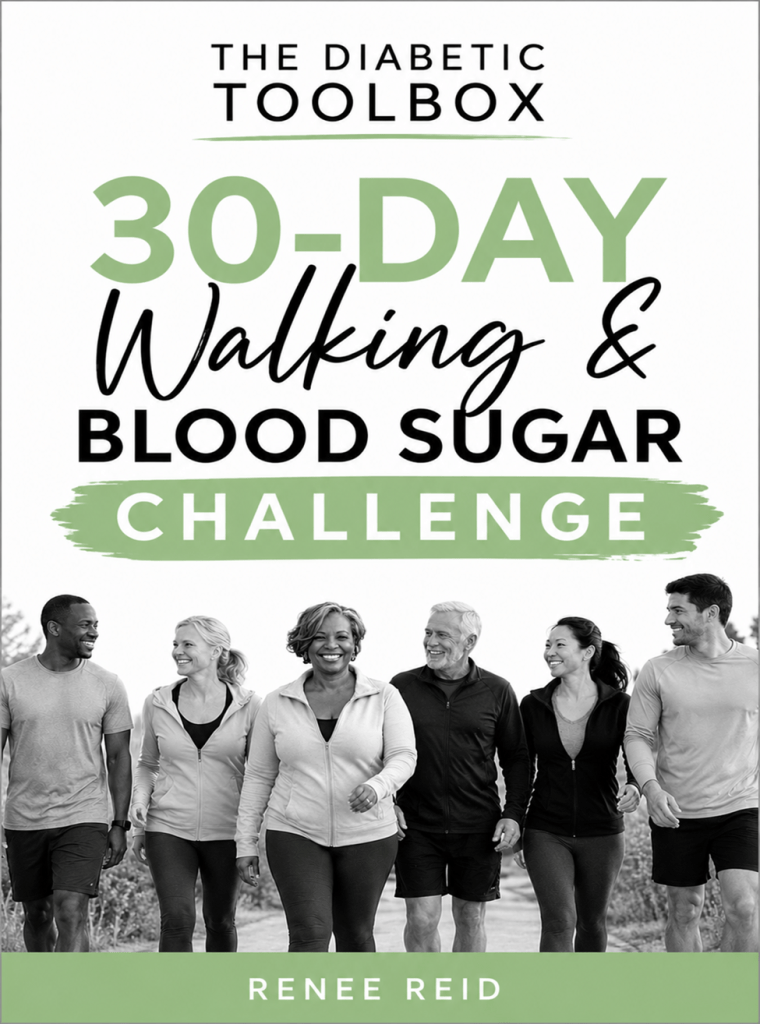
Ready to take the next step? Join my 30-Day Walking & Blood Sugar Challenge. Inside, you’ll receive a progressive walking plan, a 14-day Mediterranean-style meal plan, pre- and post-walk stretches, my weight-training guide, private community support, and direct access to me for encouragement along the way. Click this link
One of the Best First Steps You Can Take
If you’re wondering where to begin, my answer is almost always the same. Start walking. Walking is one of the most accessible forms of exercise for many adults, and even a short walk after a meal helps your muscles use glucose more effectively. You don’t need expensive equipment, a gym membership, or an hour every day. Start with what you can do today.
That might be:
- A 10-minute walk after dinner
- Walking to the end of the block and back
- Parking a little farther from the entrance
- Taking a few laps around your local park
Those small walks add up. More importantly, they help you build a routine that supports healthier blood sugar and reminds you that your health is worth investing in.
You Don’t Have to Figure This Out Alone
One of the hardest parts of a new diagnosis is sorting through all the information online. One article tells you to avoid carbohydrates. Another says carbohydrates are fine. Someone on social media swears by a supplement. Another person recommends an extreme diet. It’s exhausting.
Trust me I know, I spent hours researcher what I should do and instead of feeling like i had a solid plan, I just felt more confused. Instead of trying to do everything, focus on learning from reliable healthcare professionals and surrounding yourself with people who encourage healthy, realistic habits.
Support can come from:
- Your primary care provider
- A registered dietitian
- A certified diabetes care and education specialist
- A walking partner
- Family members
- A trusted online community
- A diabetes lifestyle coach who can help you build sustainable habits. I’m talking about me, of course.
Sometimes the greatest gift support gives us is simply knowing someone understands what we’re going through.
Questions to Ask Your Doctor at Your Next Visit
Write these questions down before your appointment. You don’t have to ask all of them, but they can help you better understand your health.
- What was my A1C?
- What is my fasting blood glucose?
- How often should I have my blood sugar checked?
- What lifestyle changes would have the biggest impact for me?
- Is it safe for me to begin a walking program?
- Should I meet with a registered dietitian?
- What weight loss goal would be appropriate for me?
- Are there medications I should know about?
- What other health numbers should I monitor, such as blood pressure or cholesterol?
- When should I schedule my next follow-up appointment?
The more you understand your numbers, the more confident you’ll feel about the decisions you’re making.
Your Seven-Day Game Plan
If I were sitting across the kitchen table with you today, this is what I’d recommend.
Day One
Take a deep breath. Remember that this diagnosis is information, not a prediction of your future.
Day Two
Go for a short walk after one meal. It doesn’t have to be long. Just begin.
Day Three
Clean out one shelf in your pantry or refrigerator and make room for healthier choices.
Day Four
Schedule your follow-up appointments if you haven’t already. Write down questions for your healthcare provider.
Day Five
Drink more water today than you normally do. Hydration supports many areas of your health.
Day Six
Invite someone you trust to join you on a walk or share your health goals. Support matters.
Day Seven
Reflect on what you’ve learned this week. Notice how much less overwhelming everything feels once you have a simple plan.
One Healthy Choice Is a Great Place to Start
You don’t have to change everything today. You don’t have to earn an A+ on healthy living. You simply need to take the next healthy step. Your diagnosis does not define who you are. It simply gives you an opportunity to care for yourself in a new way. I’ve watched hundreds of people discover they were capable of much more than they imagined. I believe the same is possible for you.
Ready for More Support?
If you’re ready to move beyond fear and begin building healthier habits, I’d love to invite you to join my 30-Day Walking & Blood Sugar Challenge.
Inside, you’ll receive:
- A progressive walking plan
- A 14-day Mediterranean-style meal plan
- Pre- and post-walk stretching routines
- My beginner-friendly weight-training guide
- A private community for encouragement and accountability
- Direct access to me for support along the way
Thank you so much for spending a few minutes with me today. Remember, change happens one habit, one choice, one day at a time.
Until next time, take good care of yourself.
With Peace & Love
Renee

