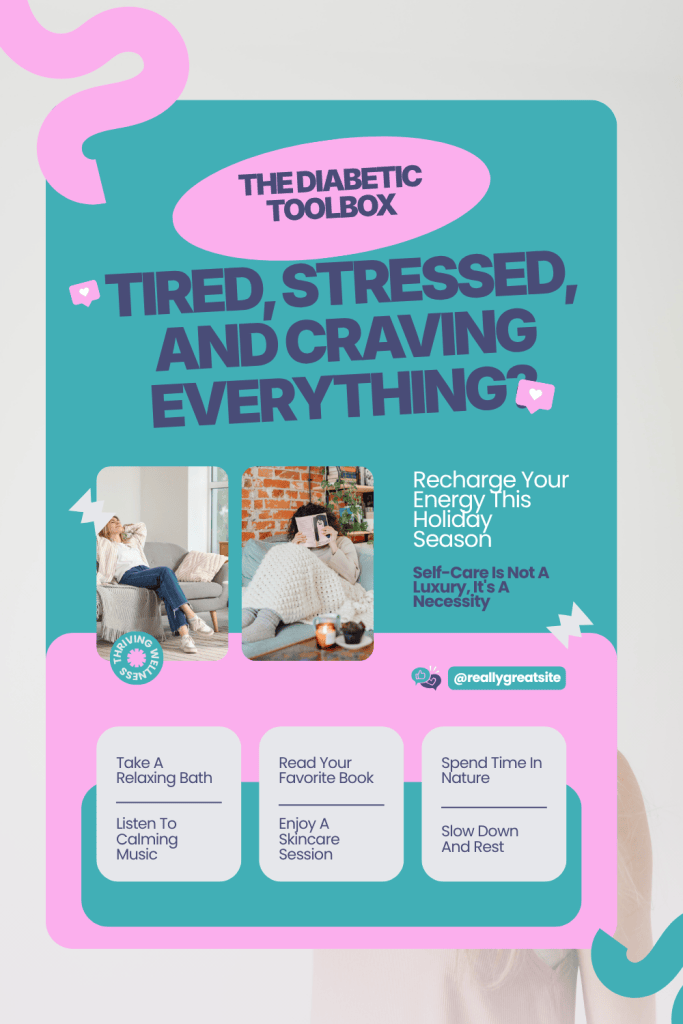
Have you ever noticed that the less sleep you get, the more you seem to crave everything in sight? Suddenly, the holiday cookies on the kitchen counter are calling your name, preparing dinner feels like another exhausting chore, and your blood sugar isn’t cooperating despite your best efforts.
The holiday season can be a wonderful time of year filled with celebrations, family gatherings, and opportunities to reconnect with the people we love. However, behind all that holiday cheer are the financial pressures, shopping, cooking, cleaning, and emotional responsibilities that can leave us physically and mentally exhausted.
When you add managing prediabetes or type 2 diabetes to that already overwhelming list, it is easy to understand why maintaining healthy eating habits can become more challenging. Sometimes, what your body needs isn’t another food rule, a stricter diet, or more discipline. What your body needs is rest.
Hello everyone, and welcome to The Diabetic Toolbox, where we are on a mission to end type 2 diabetes one family at a time through education, support, and empowerment.
If this is our first time meeting, my name is Renee. I am an emotional eating and diabetes lifestyle coach and yoga teacher. I help adults over 40 with prediabetes or type 2 diabetes lower their blood sugar, lose weight, and improve mobility without extreme dieting or spending hours in the gym.
Today, we’re talking about how inadequate sleep affects hunger, food cravings, insulin sensitivity, and our ability to make nourishing food choices, especially during the holiday season.
Yesterday, we talked about Radical Rest: Why Doing Less May Be One of the Healthiest Things You Do This Holiday Season. Today, we’re continuing that conversation by exploring the relationship between rest, nutrition, and blood sugar management.
Why Sleep Matters When You Have Prediabetes or Type 2 Diabetes
We spend a lot of time discussing what we should eat to manage our blood sugar, but how often do we consider whether we are getting enough rest to support our nutritional goals? Sleep is essential to metabolic health. When we consistently get inadequate sleep, several biological and psychological changes can make managing our appetite and blood sugar more difficult.
Inadequate Sleep Can Disrupt Hunger and Fullness
Two hormones involved in appetite regulation are ghrelin, which stimulates hunger, and leptin, which signals fullness and energy availability. Insufficient sleep can disrupt appetite regulation, including how these hormones signal, although effects can vary from person to person. You may feel hungrier throughout the day, have difficulty recognizing when you are satisfied, or reach for additional snacks shortly after eating.
Sleep deprivation can also make highly rewarding foods more appealing, particularly those rich in sugar, fat, and refined carbohydrates. During the holiday season, when these foods are readily available, navigating cravings can become even more challenging. This does not mean that enjoying a holiday dessert is unhealthy or that every craving is caused by inadequate sleep. It means that your biological needs, emotional well-being, and environment can all influence your relationship with food.
Inadequate Sleep Can Affect Insulin Sensitivity
Insulin is a hormone that helps move glucose from your bloodstream into your cells, where it can be used for energy. When you don’t get enough sleep, your cells may become less responsive to insulin. This is known as reduced insulin sensitivity, and it can make regulating your blood sugar more difficult.
Inadequate sleep can also affect your body’s stress response and cortisol regulation, a hormone that can influence glucose levels. For someone living with prediabetes or type 2 diabetes, this is an important reminder that food is not the only factor affecting blood sugar.
You can eat a nourishing meal, take your medication as prescribed, and engage in physical activity and still experience unexpected blood sugar fluctuations. Your sleep, stress levels, illness, hormonal changes, and other physiological factors can all play a role. Rather than viewing every elevated blood sugar reading as a personal failure, consider what else might be happening in your life and your body.
Exhaustion Makes Healthy Decision-Making More Difficult
Have you ever bought groceries intending to prepare nourishing meals throughout the week, only to find yourself too exhausted to cook when dinner rolls around? You know what a balanced meal looks like. You understand the importance of fiber, protein, and vegetables. You have recipes saved on your phone and groceries sitting in your refrigerator.
Yet, when you are physically and emotionally depleted, putting that knowledge into practice can feel overwhelming. Inadequate sleep can affect executive functioning, including our ability to plan, organize, regulate emotions, and make decisions. What we interpret as a lack of motivation could actually be a lack of physical or mental energy.
During the holidays, we are making countless decisions about gifts, finances, family gatherings, travel arrangements, and everyday responsibilities. By the time we need to decide what to eat for dinner, we may have very little mental energy left, and ordering takeout or reaching for something convenient may be the most manageable option. Knowing what to eat and having the energy, time, money, and resources to prepare it are two very different things. This is why diabetes education must extend beyond telling people what they should and shouldn’t eat. We must also consider the circumstances in which people are making those decisions.
Three Practical Ways to Support Your Sleep, Appetite, and Blood Sugar During the Holidays
1. Create a Realistic Evening Wind-Down Routine
Your evening routine does not need to include an elaborate skincare ritual, an hour of meditation, or a perfectly organized home. Start by giving yourself 20 to 30 minutes to transition from the day’s responsibilities into rest. You might dim the lights, put your phone away, practice gentle seated yoga, listen to calming music, or spend a few minutes practicing slow, comfortable breathing. Try to maintain a reasonably consistent bedtime and wake-up time, aiming for seven to nine hours of sleep when possible.
Consider limiting caffeine later in the day and giving yourself permission to leave some household responsibilities unfinished. We delay going to bed because we believe everything must be completed before we can rest. Your health deserves a place on your priority list, even when the laundry isn’t folded, and the kitchen isn’t spotless.
2. Make Tomorrow’s Nourishing Meal Easier Tonight
Instead of spending your evening preparing an entire week’s worth of meals, choose one small task that will make eating tomorrow easier. You might prepare overnight oats with chia seeds and berries, wash vegetables for lunch, set aside leftover chicken, or make sure you have canned beans and frozen vegetables available for a quick dinner. Convenience foods such as frozen vegetables, low-sodium canned beans, precooked whole grains, and plain Greek yogurt can be valuable tools for managing your nutrition when your energy is limited.
Focus on combining fiber-rich carbohydrates, protein, and healthy fats in ways that fit your preferences, budget, and blood sugar needs. Preparing one ingredient is enough to make tomorrow’s meal feel manageable. Healthy eating doesn’t have to take hours in the kitchen.
3. Eat Consistently and Give Yourself Permission to Enjoy Holiday Foods
With so many holiday activities competing for your attention, it’s easy to skip meals or go long periods without eating. Some people intentionally skip meals to save calories or carbohydrates for a holiday gathering. However, arriving at a celebration overly hungry and exhausted can make it more difficult to recognize fullness and make intentional food choices.
Try to maintain a reasonably consistent eating schedule that supports your individual diabetes management plan. If you take insulin or medications that can cause low blood sugar, discuss meal-timing changes with your healthcare provider. Give yourself permission to enjoy the holiday foods that are meaningful to you without attaching guilt or shame to your choices. You can enjoy a favorite family recipe, nourish your body, and care for your blood sugar without treating those goals as competing priorities.
One Action to Take Today: Give Yourself the Gift of Rest
Tonight, create a simple 30-minute evening routine that supports both your rest and tomorrow’s nutrition. Spend the first five to ten minutes making one nourishing meal easier to prepare tomorrow. This could be as simple as laying out your breakfast ingredients, moving leftovers to the front of the refrigerator, or deciding what you will have for lunch.
Use the remaining time to disconnect from your responsibilities and prepare your body for sleep. Dim the lights, silence unnecessary notifications, stretch gently, or sit quietly with a cup of caffeine-free tea. If 30 minutes feels unrealistic, start with 10. The goal is not to create another responsibility. The goal is to reduce the number of responsibilities your tired body and mind must manage tomorrow.
Rest Is Part of Your Diabetes Management Plan
As we move through the holiday season, I want to encourage you to look beyond your plate when considering your health. Your body needs nourishing food, movement, adequate sleep, emotional support, and opportunities to recover from the demands of everyday life.
The healthiest decision you can make is to decline an invitation, simplify dinner, purchase something already prepared, or go to bed earlier. You do not have to earn your rest by completing every task on your holiday to-do list. Taking care of yourself is not an interruption to your holiday responsibilities. It is essential to protect your health and preserve your ability to enjoy the season.
If you regularly experience excessive daytime fatigue, loud snoring, interrupted breathing during sleep, or persistent difficulty sleeping, speak with your healthcare provider. Conditions such as sleep apnea and insomnia can interfere with restorative sleep and may require professional treatment.
Join us tomorrow when we continue our radical rest conversation with You Don’t Have to Do It All: Radical Rest, Healthy Boundaries, and Letting Go of Holiday Guilt. We will explore the emotional side of rest, including people-pleasing, unrealistic expectations, guilt, and the pressure to create the perfect holiday experience for everyone around us. You deserve to experience the joy of the holiday season, not simply survive the responsibilities that come with it.
Not Sure What to Eat After a Prediabetes Diagnosis?
Download the FREE What Am I Supposed to Eat Now? Starter Cookbook, created for people with prediabetes or type 2 diabetes who are ready to eat differently but aren’t sure where to begin. You’ll receive the 14-Day Whole Food Starter Guide, including 7 breakfasts, 7 lunches, 7 dinners, 7 snacks, a simple shopping list, meal-building tips, and a 14-day tracker.
No complicated meal plan. No separate meals for your family. Just simple, everyday food and practical guidance to help you answer: What am I supposed to eat now? Download the FREE Starter Cookbook and start with your next meal.
Remember, change happens one habit, one choice, one day at a time.
Please share this post with someone you love, and until next time, take good care of yourself and each other.
With Peace & Love,
Renee
Disclaimer: Health and Wellness Disclaimer
The Diabetic Toolbox provides content for educational and informational purposes only and is not a substitute for professional medical advice, diagnosis, or treatment. Always consult your healthcare provider before changing your diet, medications, or exercise routine. All physical activities, including yoga and walking, carry a risk of injury, and participation is voluntary and at your own risk. Individual results vary, and we don’t guarantee specific improvements in health, fitness, weight loss, or blood sugar. Your health and safety are our priority, and we’re honored to be your health partner.

