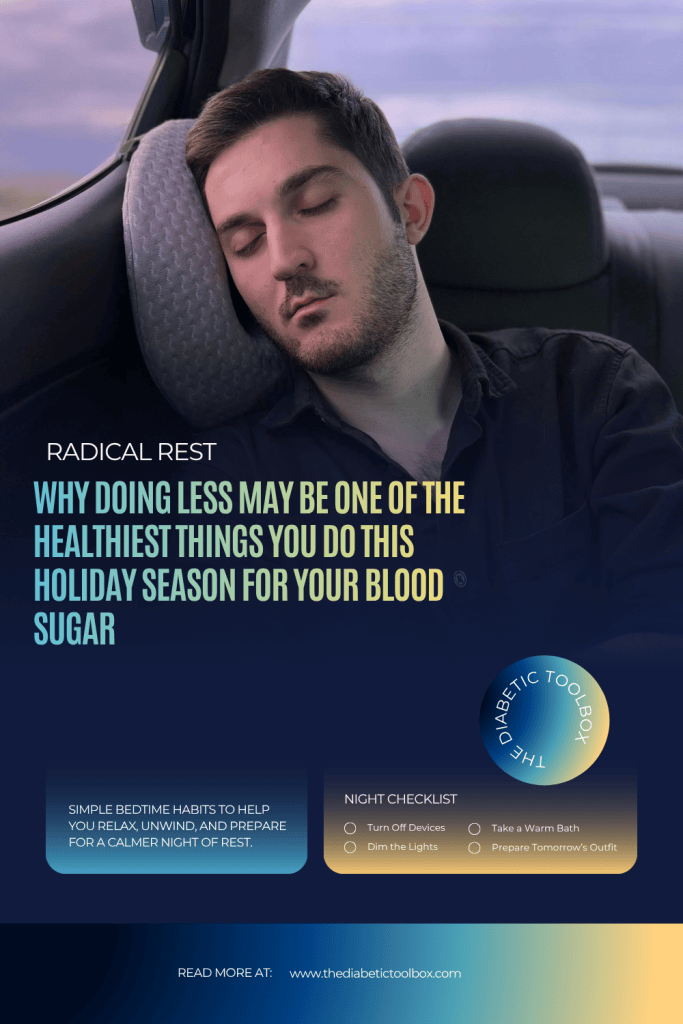
When was the last time you gave yourself permission to rest without feeling guilty about all the things you could have been doing? I’m not talking about sitting on the couch while mentally reviewing your grocery list, responding to emails, folding laundry, or worrying about what needs to happen tomorrow. I’m talking about allowing your body and mind to rest without feeling obligated to be productive.
When we talk about diabetes management, we often focus on what to eat, movement, weight loss, and medication. These are all important components of managing prediabetes and type 2 diabetes, but there is another conversation we need to have if we want to support our overall health. We need to talk about rest.
We ask our bodies to heal, regulate blood sugar, maintain energy, and respond to lifestyle changes while demanding more from ourselves than we have the physical and emotional resources to give. During the holiday season, those demands can become even greater. There are meals to prepare, gifts to purchase, family gatherings to organize, work responsibilities to manage, and people who depend on us.
Somewhere in the middle of taking care of everyone else, we forget that our bodies have needs, too. What if one of the healthiest things you could do for yourself this holiday season was to do a little less?
Hello everyone, and welcome to The Diabetic Toolbox, where we are on a mission to end type 2 diabetes one family at a time through education, support, and empowerment. If this is our first time meeting, my name is Renee. I am an emotional eating and diabetes lifestyle coach and yoga teacher. I help adults over 40 with prediabetes or type 2 diabetes lower their blood sugar, lose weight, and improve mobility without extreme dieting or spending hours in the gym.
Today, we’re talking about radical rest, the relationship between stress, sleep, and blood sugar, and why intentionally doing less can be an important part of your diabetes management routine.
What Is Radical Rest, and Why Do We Need It?
When I talk about radical rest, I mean making rest an intentional part of how we care for ourselves, rather than treating it as something we earn after completing everything on our list. Think about that for a moment. How often have you told yourself that you’ll rest after the holidays, after you finish a project at work, after everyone has been fed, or after you’ve taken care of your family’s needs?
The problem is that something else will almost always need your attention. We become so accustomed to being busy that slowing down makes us uncomfortable. We begin to associate our value with how much we accomplish, how many people we help, and how well we manage our responsibilities. We can even turn taking care of our health into another exhausting obligation. We need to prepare healthy meals, exercise, monitor our blood sugar, drink enough water, attend medical appointments, and remember to take our medications.
These habits are important, but our health routines should also include opportunities for recovery. Radical rest is not about abandoning your responsibilities, spending every day in bed, or giving up physical activity. It means recognizing that your body needs opportunities to recover and that you deserve to make room for them.
Rest can include getting adequate sleep, reducing unnecessary commitments, spending time in nature, enjoying a hobby, practicing restorative yoga, or simply allowing yourself to sit without needing to accomplish something. Rest is not laziness. It is an important part of caring for your physical, mental, and emotional health.
Why Stress and Rest Matter When You Have Prediabetes or Type 2 Diabetes
What Happens to Your Blood Sugar When You’re Stressed?
Have you ever checked your blood sugar after a particularly stressful day and wondered why it was higher than you expected, even though you had been mindful of what you ate? Food is not the only factor that influences blood glucose. When your body experiences stress, it releases hormones, including cortisol and adrenaline, that help prepare you to respond to a perceived threat or challenge.
These hormones can signal your liver to release stored glucose into your bloodstream, providing your body with additional energy. Cortisol can also reduce how effectively your body responds to insulin. This response serves an important purpose when you need to react to danger. However, many of the stressful situations we experience today don’t require us to run from danger.
We’re worried about paying bills, meeting deadlines, caring for aging parents, navigating family disagreements, or figuring out how to make the holidays special for everyone. Our bodies can still respond to these emotional and psychological stressors. When stress becomes chronic, it can contribute to blood sugar management difficulties, particularly for people who already experience insulin resistance.
Stress doesn’t affect everyone’s blood glucose in exactly the same way, and an unexpected blood sugar reading can have several causes. However, understanding the relationship between stress and blood sugar can help you recognize why managing diabetes involves more than monitoring what is on your plate.
Why Your Body Needs Sleep to Support Healthy Blood Sugar
Let’s talk about sleep. How many times have you stayed up later than you intended because nighttime was your only chance to do something for yourself? Perhaps you were watching your favorite TV program, scrolling through social media, wrapping gifts, or enjoying a few uninterrupted moments after everyone else went to bed.
I understand the desire to reclaim some of that time for yourself. Unfortunately, regularly sacrificing sleep can make managing your health more challenging. Insufficient sleep can reduce insulin sensitivity, meaning your body’s cells may not respond to insulin as effectively. When that happens, glucose can have more difficulty moving from your bloodstream into your cells.
Poor sleep can also influence appetite regulation, food cravings, energy levels, mood, and your ability to make thoughtful decisions. Think about how you feel after a night of inadequate sleep. Are you more interested in preparing a balanced breakfast, or are you looking for something quick that will give you energy?
Do you feel motivated to take a walk, or would you rather sit down because you’re exhausted? Are you more patient when something unexpected happens, or do small frustrations suddenly feel much bigger? What we interpret as a lack of motivation or willpower is connected to physical and mental exhaustion.
Most adults need at least seven hours of sleep each night, although individual needs vary. If you regularly struggle to fall asleep or stay asleep, have excessive daytime fatigue, loud snoring, or wake up gasping for air, please discuss these symptoms with your healthcare provider. Sleep disorders, including obstructive sleep apnea, can affect blood sugar management and are particularly important to identify in people with type 2 diabetes. Getting adequate sleep is not a luxury. It is essential to your health.
Why Adults Over 40 Sometimes Struggle to Prioritize Rest
For many of us over 40, this season of life comes with responsibilities that pull us in several directions. We may be caring for aging parents, supporting adult children, helping raise grandchildren, managing careers, maintaining households, and navigating changes in our own health. Some of us have spent decades being the person everyone calls when they need something.
We are the organizers, the caregivers, the problem solvers, and the people who remember everyone’s birthdays, appointments, and favorite holiday dishes. We have become so dependable that the people around us assume we will keep managing everything without help.
We reinforce that expectation by refusing help, insisting on doing everything ourselves, or feeling guilty when we say no. During the holidays, this can become especially challenging.
You may feel responsible for maintaining family traditions, preparing an elaborate meal, purchasing gifts for everyone, or creating experiences that remind your loved ones of holidays from years past.
But have you stopped to consider whether those traditions still work for the person you are today? Your energy levels may have changed. Your financial circumstances may have changed. Your health needs may have changed.
- You can adjust your responsibilities to reflect those changes.
- You can love your family without preparing every dish yourself.
- You can be a wonderful parent or grandparent without attending every holiday event.
- You can be a caring friend without being available every minute of the day.
Taking care of yourself does not diminish the love you have for the people in your life.
Three Practical Ways to Practice Radical Rest This Holiday Season
Tip 1: Give Yourself Permission to Simplify Your Holiday Responsibilities
Look at everything you have planned for the next several weeks and ask yourself which responsibilities genuinely need your personal attention. Sometimes we keep doing things the way we always have. If you traditionally prepare an entire holiday dinner, consider asking each family member to bring a dish. If shopping for everyone has become financially or emotionally overwhelming, suggest a family gift exchange or agree to purchase gifts only for the children.
If attending multiple holiday gatherings leaves you exhausted, decide which events are most meaningful to you. You can also simplify your everyday meals by using frozen vegetables, prepared ingredients, or leftovers instead of cooking elaborate meals every evening. Remember, the purpose of simplifying is not to remove everything you enjoy. It is to reduce the responsibilities that consume your energy without adding meaningful value to your life.
You might discover that your family is more interested in spending time with you than in whether you prepared six side dishes from scratch. Give the people who love you a chance to contribute, and give yourself permission to accept their help.
Tip 2: Protect Your Sleep Like You Protect Your Medical Appointments
We make time for medical appointments because we understand their importance, but sometimes we treat sleep as optional. This holiday season, I encourage you to establish a bedtime routine that supports your body’s need for recovery. Start by choosing a realistic bedtime that allows you to get adequate sleep.
Give yourself time to transition from the day’s demands by reducing screen time, preparing what you need for the next morning, and creating a comfortable sleeping environment. You might enjoy reading, listening to relaxing music, practicing gentle breathing exercises, or taking a warm shower before bed. If your mind is occupied with everything you need to accomplish tomorrow, write those thoughts in a notebook so you don’t feel obligated to review them in your head all night. Limit caffeine later in the day if it interferes with your sleep, and be mindful that alcohol can disrupt sleep and affect blood glucose.
If nighttime blood sugar fluctuations, frequent urination, or symptoms of low blood sugar are interfering with your sleep, speak with your healthcare provider rather than adjusting your medication independently. Protecting your sleep is one way to support your body’s ability to respond to the other healthy habits you are working to establish.
Tip 3: Create Small Opportunities for Rest Throughout Your Day
You do not have to schedule an entire afternoon at a spa or take a vacation to practice radical rest. Sometimes your body and mind benefit from having several opportunities to recover throughout an ordinary day. Consider spending ten minutes enjoying your morning tea without checking your telephone. Take your lunch break instead of eating while answering emails. Sit outside for a few minutes and enjoy the fresh air. Practice gentle seated yoga, listen to your favorite music, or spend time doing something that brings you joy without requiring you to produce anything.
As a yoga teacher, I value creating space for relaxation, comfortable breathing, and reconnecting with how our bodies feel. Restorative activities can complement your regular movement routine rather than replace it. If you are managing prediabetes or type 2 diabetes, continue following your healthcare provider’s recommendations for physical activity, medication, nutrition, and blood sugar monitoring.
If you take insulin or medications that can cause low blood sugar, follow your individualized glucose monitoring and exercise safety plan. Radical rest is not about becoming physically inactive. It is about finding a healthier balance between activity and recovery so that you are not constantly asking your body to operate from a place of exhaustion.
One Simple Action You Can Take Today
Today, I want you to identify one responsibility that you can simplify, delegate, or release this week. Just one. Think about something that has been consuming your physical energy, mental energy, or emotional resources. Ask yourself these three questions:
- Does this responsibility truly need to be completed?
- Does it need to be completed the way I have always done it?
- Does it need to be completed by me?
Once you have made your decision, intentionally use some of the time you have reclaimed to rest. Resist the temptation to immediately fill that space with another responsibility. This exercise allows you to experience what it feels like to honor your own needs.
You Deserve to Enjoy the Holidays, Too
My friend, I want you to enjoy this holiday season. I want you to enjoy your family, your favorite traditions, meaningful conversations, delicious meals, and the moments that make this time of year special to you. But I also want you to arrive in January without feeling as though you need several weeks to recover from everything you put yourself through in November and December.
We approach the new year feeling physically exhausted, emotionally depleted, and frustrated with our health. We then respond by creating demanding exercise schedules, restrictive eating plans, and another long list of expectations.
- What if we approached this season differently?
- What if we began caring for ourselves now instead of waiting until January?
- What if we recognized that adequate sleep, emotional well-being, enjoyable movement, balanced meals, and opportunities for rest all belong in the same conversation about diabetes management?
You cannot eliminate every source of stress in your life. Some responsibilities cannot be delegated, and some circumstances are beyond your control. However, you can begin examining the expectations you place upon yourself and identifying where there is room for change. Rest alone will not reverse diabetes or replace medical treatment, but it can support the physical and emotional resources you need to care for your health.
You deserve to experience the holidays, not simply spend them making sure everyone else has a wonderful time. This holiday season, give yourself permission to do a little less, sleep a little more, ask for assistance, and be present for the moments that matter most. Your health deserves a place on your holiday calendar, and sometimes taking care of your health means allowing yourself to rest.
Not Sure What to Eat After a Prediabetes Diagnosis?

Download the FREE What Am I Supposed to Eat Now? Starter Cookbook, created for people with prediabetes or type 2 diabetes who are ready to eat differently but aren’t sure where to begin. You’ll receive the 14-Day Whole Food Starter Guide, including 7 breakfasts, 7 lunches, 7 dinners, 7 snacks, a simple shopping list, meal-building tips, and a 14-day tracker.
No complicated meal plan. No separate meals for your family. Just simple, everyday food and practical guidance to help you answer: What am I supposed to eat now?
Download the FREE Starter Cookbook and start with your next meal.
Remember, change happens one habit, one choice, one day at a time. Please share this post with someone you love, and until next time, take good care of yourself and each other.
With Peace & Love,
Renee
Health and Wellness Disclaimer
The Diabetic Toolbox provides content for educational and informational purposes only and is not a substitute for professional medical advice, diagnosis, or treatment. Always consult your healthcare provider before changing your diet, medications, or exercise routine. All physical activities, including yoga and walking, carry a risk of injury, and participation is voluntary and at your own risk. Individual results vary, and we don’t guarantee specific improvements in health, fitness, weight loss, or blood sugar. Your health and safety are our priority, and we’re honored to be your health partner.

