Listen to the Latest Episode of The Diabetic Toolbox: Restarting Your Gym Routine: The Hardest Part Was Walking Through the Gym Door
Hello, my friend, and welcome to The Diabetic Toolbox, where we are on a mission to end type 2 diabetes, one family at a time, through education, support, and empowerment.
If this is our first time meeting, my name is Renee. I am an emotional eating and diabetes lifestyle coach and yoga teacher. Today is another post in my Back to Me series, where I share each week how I am taking control of my health, physically and emotionally.
Today we are talking about something I think a lot of us struggle with but don’t always want to admit: starting over after we stopped taking care of ourselves the way we know we should. I did not want to go back to the gym.
I knew I needed to go. I knew how much better I had felt when I was swimming, lifting weights, and walking consistently. I knew what regular movement had done for my strength, mobility, energy, and confidence. I had even reduced the arthritic pain in my knee. I had evidence from my own body that what I was doing was working. And then I stopped.
Weeks passed, and eventually I had to face something I did not want to face. Some of those gains were gone. Not all of them, but enough that I could feel the difference. My body felt stiffer. My strength was not where it had been. My knee was hurting again. Things that had started becoming easier felt difficult again.
That was frustrating because it can take weeks and months to build strength, improve endurance, lose weight, and increase mobility. Yet it can feel like those gains disappear much faster than they arrived. And there I was, standing on the other side of all that work, knowing exactly what I needed to do. I had to walk back through the gym door.
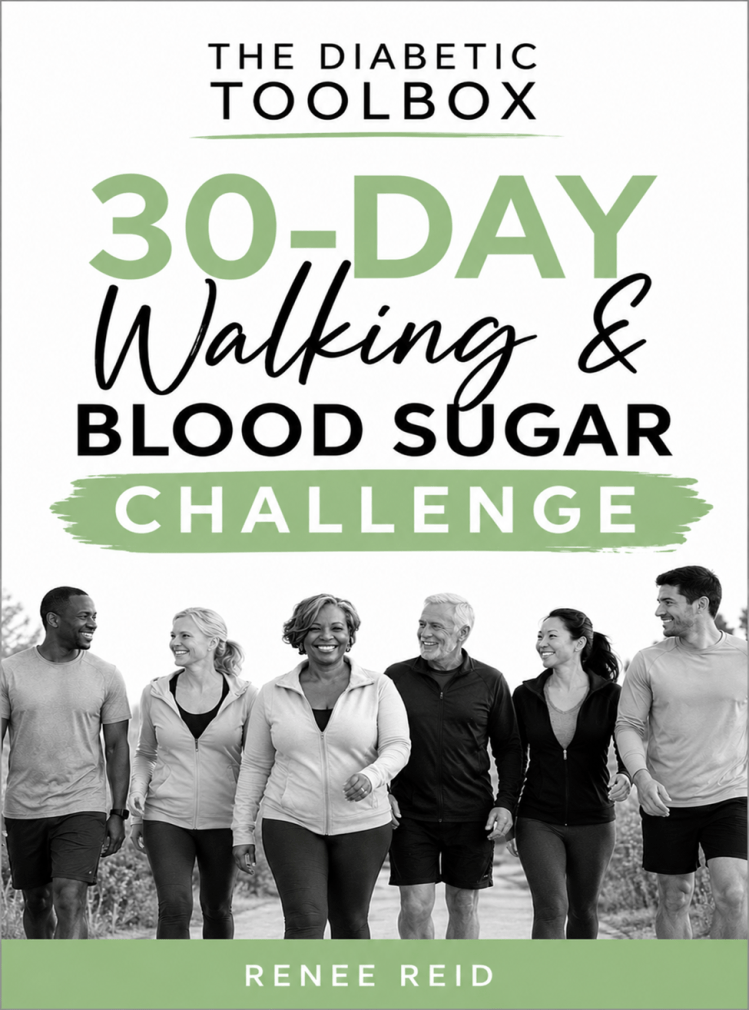
Where could your blood sugar be in 30 days? Ready to take the next step? Join my 30-Day Walking & Blood Sugar Challenge. Inside, you’ll receive a progressive walking plan, a 14-day Mediterranean-style meal plan, pre- and post-walk stretches, my weight-training guide, private community support, and direct access to me for encouragement along the way. Click this link: https://payhip.com/b/CBTkW
This Week’s Honest Moment: Life Got Busy, and I Let Exercise Go
I wish I could tell you there was one dramatic moment when I decided to stop working out, but there wasn’t. Life simply got busy. I moved. I decided to stop treating my coaching business like a hobby and start building it like a real business. My son got married, which meant celebrating, preparing, and traveling out of the country. One thing happened, then another, and then another. Somewhere in the middle of all those very real life changes, my daily workouts got pushed right off my to-do list.
The difficult part is that I saw it happening. I knew I wasn’t exercising. I could feel myself becoming less active. I knew how hard I had worked to build my strength, improve my swimming, increase my walking, and reduce the arthritic pain in my knee. I knew what I was risking by continuing to put exercise off. But my days felt so full that I felt helpless to stop. I kept thinking I would get back to it when things settled down. Tomorrow became next week. Next week became another week. Before I knew it, returning to the gym felt like this enormous thing I had to do instead of something that had once simply been part of my life.
And here’s something else I didn’t do. I didn’t talk to my coach about it. I was embarrassed. Yes, I am a coach, and I was embarrassed to tell my own coach that I wasn’t doing what I knew I needed to do. Even coaches get embarrassed. Even coaches struggle. Even coaches sometimes avoid the very conversation that could help them get unstuck. Looking back, that embarrassment kept me isolated when what I actually needed was support. I didn’t need someone to scold me for missing my workouts. I needed someone to help me figure out how movement could fit into the life I was actually living now.
What I Learned: A Full Life Still Needs Room for My Health
This experience forced me to confront something uncomfortable. Everything that pulled me away from exercise wasn’t bad. My son getting married was wonderful. Traveling was part of celebrating an important moment in our family. Moving required my attention. Building The Diabetic Toolbox into a serious coaching business matters deeply to me.
The problem wasn’t that I was wasting my life doing things that didn’t matter. The problem was that everything mattered except me. I kept allowing my health to become the thing that could wait. That is a dangerous pattern because there will always be another deadline, another family responsibility, another business project, another trip, another unexpected expense, another tired morning, and another reason that today isn’t convenient.
If exercise requires my life to become quiet before I can do it consistently, I am going to spend a lot of time waiting. So I am changing the question. Instead of asking, “When will I have time to exercise again?” I am asking, “What kind of exercise fits the life I have right now?”
That answer might look different from what I was doing before. It might mean a shorter walk. Fewer laps in the pool. A 20-minute strength workout instead of an hour at the gym. Ten minutes of yoga before bed. But something counts. And right now, something done consistently is far more valuable to me than the perfect workout I keep postponing.
Support Is for the Messy Parts Too
I also learned something important about coaching from being on the other side of the relationship. Your coach does not only need to hear from you when you’re doing well. In fact, the moment you are most tempted to disappear might be the moment you need support the most.
If you haven’t exercised in three weeks, say it. If you’ve been eating in ways that aren’t supporting your goals, say it. If you’re overwhelmed, say it. If the plan we created isn’t working in your real life, say it. That isn’t failure. That is information. A good coach cannot help you adjust a plan if they don’t know it’s stopped working.
I needed to remember that myself. I teach people that support is one of the pillars of managing their health, and then when I struggled, embarrassment convinced me to withdraw from my own support system. That is a lesson for me, both as a woman working on her health and as a coach helping others work on theirs. We should not have to pretend we’re doing well to deserve support. Sometimes support is exactly how we find our way back.
What I Learned: Starting Again Is Not the Same as Starting From Zero
This was the lesson I needed most. I was not actually back where I started. Yes, I had lost some strength and endurance. Yes, my body had changed. Yes, I had regained some weight. Yes, things I could do before were harder now. But I still knew how to exercise.
I knew how to use the equipment. I knew how to structure a workout. I knew how my body responded to walking, swimming, yoga, and strength training. I knew what it felt like to become stronger because I had already done it. Most importantly, I had proof that I could do it again.
Sometimes when we return to exercise, we focus so much on what we have lost that we overlook everything we kept. You kept the knowledge. You kept the experience. You kept the lessons. And somewhere underneath the frustration, your body still remembers what it means to move.
One Change I’m Making This Week: I’m Not Trying to Impress Anyone
I am permitting myself to rebuild. That means I do not need to lift the weights I used to lift just because I lifted them before. I do not have to swim as many laps as I once did. I do not have to walk as far or as fast as someone else. My job right now is not to prove how fit I used to be. My job is to become active again. That distinction matters.
Trying to recreate our old workouts immediately can turn returning to exercise into punishment. Instead, I am meeting my body where it is today and letting it get stronger. That means shorter workouts when necessary. Lighter weights when necessary. More rest when necessary. And then I come back and do it again.
Your Body Can Rebuild
Another reason I refuse to call this starting from zero. Your body adapts to what you repeatedly ask it to do. When we stop training for an extended period, strength and cardiovascular fitness can decline. That is normal. It doesn’t mean all the work you did was wasted. When you begin training consistently again, your body begins adapting again.
For those of us managing prediabetes or type 2 diabetes, returning to regular physical activity is about much more than fitting into smaller clothes. Physical activity can help improve insulin sensitivity, support blood sugar management, maintain muscle, improve cardiovascular fitness, and help us remain mobile and independent as we get older. And this is where I want us to be careful.
The frustration of losing fitness can tempt us to come back too aggressively. We want to make up for lost time, so suddenly we are exercising six days a week, walking miles, lifting heavy weights, and trying to undo several months in several days. We do not need to punish ourselves back into health. We need to rebuild it. Start where your body is today and give yourself somewhere to grow.
The Comparison Trap
I also had to deal with another uncomfortable feeling when I returned to the gym. Comparison. You walk in and see someone younger lifting heavier weights. Someone is running while you are walking. Someone seems to move effortlessly while you struggle through your first workout back.
And suddenly you start feeling like everybody is looking at you. Most of them aren’t. They are trying to finish their workouts, remember their repetitions, answer their text messages, choose the next song on their playlist, and get home. And even if someone does notice me, what are they actually seeing? They are seeing a woman who came back. That is nothing to be embarrassed about.
I refuse to compare my Chapter 66 with someone else’s Chapter 26. My workout needs to serve the life I am living now. I want strong legs. I want muscle. I want better balance. I want to protect my mobility. I want to manage my blood sugar. I want to be able to travel, walk through museums, climb stairs, carry my groceries, get up from the floor, and continue living independently. Those are the goals that deserve my attention.
Beginning Anyway
Fear does not always disappear before we act. Sometimes we have to do something while we are still afraid. I was uncomfortable. I went anyway. I was embarrassed about how much strength I had lost. I went anyway. I did not look or feel the way I wanted to feel. I went anyway.
My first workout back was not impressive; I could barely swim a lap in the pool. I went anyway. And then I did something even more important. I went back again. Because one workout gets us through the door. Repeated workouts rebuild the habit. The longer we wait, the bigger that door can become in our minds.
Getting back up is part of the story too. Perhaps you stopped walking. Perhaps you stopped going to the gym. Perhaps the weights have been sitting untouched in the corner. Perhaps life became difficult and exercise moved further and further down your priority list. You are allowed to return, and you do not have to explain your absence before you begin again.
- Get up.
- Put on your shoes.
- And take the next step.
Join Me This Week: Just Go Back
Here is my challenge for you this week: go back once. That is it.
- If you have been avoiding the gym, walk through the door.
- If you have stopped walking, take a 10-minute walk.
- If your dumbbells have been gathering dust, pick them up and do a short strength workout.
- If you stopped swimming, get back into the pool.
Don’t try to make up for everything you didn’t do. Just restart the conversation with your body. Then give yourself another opportunity to show up. This is also why I created my 30-Day Walking & Blood Sugar Challenge. Sometimes getting started again is easier when somebody has already laid out the path for you. You do not have to wake up every morning wondering what you should do. You simply take today’s step and keep building from there.
Reflection Questions
I want you to think about this: What are you waiting to feel, look like, or become before you permit yourself to start again?
Then ask yourself one more question: What would happen if you stopped waiting and began exactly as you are?
Take Action
Thank you so much for spending a few minutes with me today. Let us know in the comments: What did your first workout feel like when you returned after being away for a while? What helped you walk through that door again?
Download today’s reference guide: 10 Things You Do Not Have to Do to Lose Weight, Lower Your Blood Sugar, or Increase Your Mobility.
Where could your blood sugar be in 30 days? Ready to take the next step? Join my 30-Day Walking & Blood Sugar Challenge. Inside, you’ll receive a progressive walking plan, a 14-day Mediterranean-style meal plan, pre- and post-walk stretches, my weight-training guide, private community support, and direct access to me for encouragement along the way.
Click here to join: https://payhip.com/b/CBTkW. You do not have to become the person you were before you stopped. You get to discover who you can become because you decided to start again.
Remember, change happens one habit, one choice, one day at a time.
Until next time, take care of yourself and each other.
With Peace & Love,
Renee
Disclaimer: The Diabetic Toolbox content is for informational and educational purposes only and is not a substitute for professional medical advice, diagnosis, or treatment. Always consult your licensed healthcare provider before making changes to your diet, medication, or fitness routine. Participation in any program, including our Yoga Audio Series, is at your own risk. Your health and safety are our top priorities, and we’re honored to walk this journey with you.

