
Download your companion guide: Starting Your Movement Plan: Yes, It Might Hurt, But This Will Help: A Simple Before and After Movement Guide
Hello everyone, and welcome to The Diabetic Toolbox, where we are on a mission to end type 2 diabetes one family at a time through education, support, and empowerment.
If this is our first time meeting, my name is Renee. I am an emotional eating and diabetes lifestyle coach and yoga teacher. I help adults over 40 with prediabetes or type 2 diabetes lower their blood sugar, lose weight, and improve mobility without extreme dieting or spending hours in the gym.
Today, we’re talking about starting your movement plan and something I hear from people all the time. “I know I need to exercise, but I’m afraid it’s going to hurt.” My answer is always honest. “It might.” I know that probably isn’t what you expected me to say. I could tell you that exercise is going to feel wonderful from the very first day, that you’re going to wake up excited to work out every morning, and that nothing is going to ache afterward.
But you and I both know better. If you haven’t exercised in months or years, your body may have something to say when you start asking it to move again. Your muscles may feel sore. Your legs may get tired faster than you expected. Your joints may feel stiff. You might be surprised that a short walk leaves you breathing harder than you remember.
That doesn’t mean you shouldn’t move. It means we need to be thoughtful about how you begin. And I want to make an important distinction right here. Normal muscle fatigue or mild soreness from doing something your body isn’t accustomed to is very different from sharp or severe pain, chest pain, dizziness, unusual shortness of breath, or pain that gets worse as you continue exercising.
I don’t want you exercising through warning signs because somebody told you, “No pain, no gain.” That’s not what we’re doing here. We’re learning how to move our bodies in ways that support our health.
Your first day isn’t supposed to look like a marathon. It might be a five-minute walk around your neighborhood. It might be five minutes of gentle movement in your living room. It might be walking through the shallow end of the pool or swimming six easy laps. Every one of those is a legitimate place to begin.
Movement is one of the most valuable tools we have in a comprehensive plan for managing prediabetes and type 2 diabetes. Physical activity helps your muscles use glucose, supports cardiovascular health, builds strength, and helps protect the mobility you need to live your everyday life. So if fear of pain has been keeping you on the sidelines, let’s talk about four things you can do to make beginning a little easier.
1. Start With the Body You Have Today
One of the biggest mistakes we make when beginning an exercise program is starting with the body we remember having instead of the body we have today. Maybe you used to walk three miles without thinking about it. Maybe you belonged to a gym years ago. Maybe you used to dance all night, ride your bike for hours, or swim twenty laps. And now five minutes of walking feels difficult. That can be humbling.
It can also make you want to push harder than your body is ready for because you’re trying to prove to yourself that you can still do what you used to do. You don’t have to prove anything. Your job is to find out what your body can comfortably do today and begin there. If five minutes of walking feels challenging, walk for five minutes. If standing for long periods hurts, consider seated movement, a stationary bike if appropriate for you, or water exercise.
If you’re worried about balance, exercise near a sturdy countertop or chair, or talk with a qualified professional about activities appropriate for your mobility level. Starting with five minutes isn’t admitting defeat. You’re establishing a baseline.
Once you know what you can comfortably do, you have a foundation to build on. And please don’t measure that beginning against someone else’s workout. The person walking three miles around the park may have been walking for years. You are responsible for your body, not theirs.
2. Wake Up Your Body Before You Ask It to Work
Think about getting into your car on a freezing winter morning. You start the engine and give it a moment before asking it to do very much. Your body deserves some preparation too. If you’ve been sitting at a desk for eight hours and immediately head outside for a brisk walk, your hips, knees, ankles, and back may feel pretty stiff.
Give yourself a few minutes to transition from sitting to moving. You might begin with ankle circles, shoulder rolls, gentle knee lifts, marching in place, or easy movements through a comfortable range of motion. Then start your activity at an easier pace.
If you’re walking, the first few minutes don’t need to be your fastest minutes. Let your body warm up. Hydration matters too. Don’t wait until you’re thirsty halfway through your activity to think about water, particularly if you’re exercising outside in warm weather. And pay attention to your shoes.
If you’re walking regularly, supportive, properly fitting shoes matter. For people living with diabetes, foot care deserves particular attention because neuropathy and circulation problems can make foot injuries more serious and sometimes harder to notice. Take a few minutes to prepare before you start. Those minutes count toward your workout.
3. Learn the Difference Between Effort and a Warning Sign
This may be one of the most important skills you develop as you become more active. You need to learn what your body is telling you. Exercise involves effort. Your heart rate may increase. Your breathing may become faster. Your muscles may get tired. You might feel your legs working when you walk up a hill or your arms working when you’re lifting weights.
That’s different from ignoring pain because you’re determined to finish a workout. If you’re walking and suddenly experience sharp knee pain, don’t keep limping another mile because your fitness tracker says you haven’t reached your goal.
If you’re swimming and your shoulder starts hurting in a way that feels wrong, stop. If you become dizzy, experience chest pain, feel faint, have severe shortness of breath, or experience other concerning symptoms, stop exercising and seek appropriate medical attention.
There is no prize for finishing a workout your body is telling you to stop. If you’re taking insulin or medications that can cause low blood sugar, talk with your healthcare provider about how physical activity may affect your glucose and whether you need to check your blood sugar around exercise.
You may also need individualized guidance if you have neuropathy, heart disease, vision complications, significant joint problems, balance concerns, or other medical conditions. Being careful doesn’t make you less committed. It makes you someone who intends to keep moving for years to come.
4. Take Care of Your Body After You Move
Your workout isn’t necessarily finished the second you stop walking, cycling, swimming, or lifting weights. Give yourself a few minutes afterward. Slow your pace rather than stopping abruptly after more vigorous activity. Let your breathing settle. Drink some water.
If gentle stretching feels comfortable, spend a few minutes stretching the muscles you used. You might stretch your calves after walking, open your chest and shoulders after cycling, or do a few gentle full-body movements after swimming.
Then pay attention to how you feel later that day and the following morning. A little muscle soreness after doing something new can happen. But significant pain isn’t something you need to accept as the price of getting healthier. Your recovery also gives you information.
Ten minutes felt wonderful and you could comfortably repeat it. Maybe fifteen minutes was too much. Walking on concrete bothered your knees, but walking in the pool felt much better. That’s useful information. You’re discovering which forms of movement work for your body.
If you have diabetes, check your feet after walking or other weight-bearing activity. Look for redness, blisters, cuts, swelling, or areas that feel different. If you have reduced sensation in your feet, regular foot checks become especially important. Taking care of yourself afterward isn’t separate from your movement plan. It’s part of it.
Why Movement Matters So Much When You Have Prediabetes or Type 2 Diabetes
I want to come back to the reason we’re having this conversation. If you have prediabetes or type 2 diabetes, movement needs a place in your health management plan. That doesn’t mean movement replaces medication when medication is needed. It doesn’t replace nutritious food, sleep, stress management, medical appointments, or health monitoring.
But movement matters. When your muscles work, they use glucose for energy. Regular physical activity can also improve your body’s response to insulin. Then there are benefits that aren’t captured by a glucose meter.
Think about what mobility allows you to do. Walking through the grocery store without needing to sit down. Getting out of a chair more easily. Climbing the stairs. Carrying groceries. Traveling. Gardening. Playing with your grandchildren. Getting down on the floor and getting back up. Living independently.
That’s why I don’t want you thinking of movement only as something you have to do just to lose weight. We’re building a body that can carry us through our lives.
Can I Improve My Blood Sugar Naturally?
For many people with prediabetes or type 2 diabetes, lifestyle changes can play a significant role in improving blood sugar management. Regular physical activity is one part of that picture.
Nutritious food, adequate sleep, stress management, weight management when appropriate, medication when prescribed, and regular medical care matter too. I don’t want you chasing one magical solution. I want you building a collection of habits that support your health. Movement belongs in that collection. And you don’t have to become an athlete to receive benefits from being more active. You simply need an appropriate place to begin.
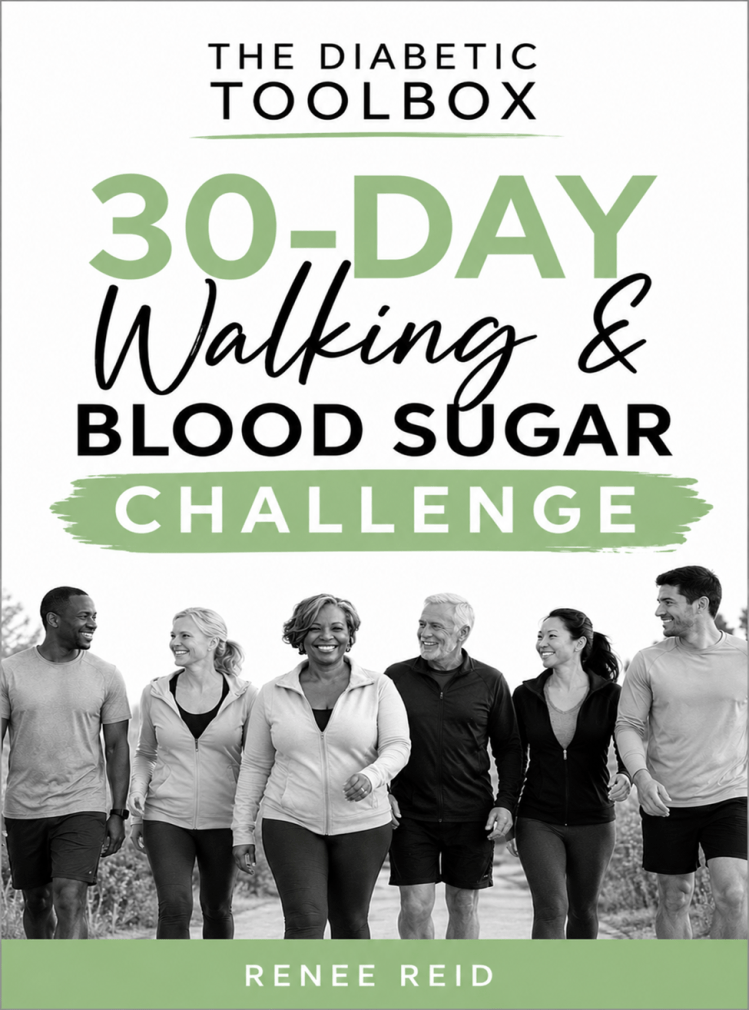
Where could your blood sugar be in 30 days? Ready to take the next step? Join my 30-Day Walking & Blood Sugar Challenge. Inside, you’ll receive a progressive walking plan, a 14-day Mediterranean-style meal plan, pre- and post-walk stretches, my weight-training guide, private community support, and direct access to me for encouragement along the way
One Thing You Can Do Today
Here’s your assignment. Choose five minutes. That’s it. Put on your walking shoes and walk for five minutes. You can walk around your neighborhood, through your apartment building, around your house, or at the mall. If walking isn’t appropriate for you, choose another form of movement that works for your body. Maybe that means gentle chair movement, walking in the pool, or spending five minutes on a stationary bike. When you’re finished, don’t judge the workout by how many calories your watch says you burned or how far you went. The goal today is simply to move your body for five minutes and pay attention to how it feels.
Ask yourself:
- How did my body feel?
- How was my breathing?
- Did anything hurt?
- What felt good?
- Could I comfortably do this again?
Those answers will teach you more about where to begin than comparing yourself with someone else’s workout ever will.
Your Movement Plan Begins With Today
If you’ve been afraid to exercise because you’re worried it’ll hurt, I understand why you’ve hesitated. But I don’t want you to fear making this decision. You don’t need to go from sitting on the couch to walking three miles.
You don’t need to exercise for an hour. You don’t need to punish your body for getting older, gaining weight, becoming less active, or being diagnosed with prediabetes or type 2 diabetes. Start with the body you have today. Prepare it before you exercise. Listen to it while you’re moving. Take care of it afterward. Then come back and move again.
That five-minute walk may not seem like much compared with somebody else’s workout. But we’re not building somebody else’s life. We’re working on yours. And that brings me to a question I want you to think about.
Where could your blood sugar, strength, mobility, and confidence be 30 days from now if you started today?
The Diabetic Toolbox 30-Day Walking & Blood Sugar Challenge
Ready to take the next step? Join my 30-Day Walking & Blood Sugar Challenge and let me help you turn that first walk into a structured movement and healthy lifestyle plan.
Inside, you’ll receive:
• A progressive walking plan
• A 14-day Mediterranean-style meal plan
• Pre- and post-walk stretches
• My weight-training guide
• Private community support
• Direct access to me for encouragement along the way
You don’t need to be an active person already. You don’t need to spend hours exercising. And you don’t need to figure out what to do every day on your own. We’ll start with a plan and spend the next 30 days helping you put that plan into action.
Remember, change happens one habit, one choice, one day at a time. Alright, my friend, that is all I have for you today. Please share today’s post with someone you love.
Until next time, take care of yourself and each other.
With Peace & Love,
Renee
Disclaimer
The Diabetic Toolbox content is for informational and educational purposes only and is not a substitute for professional medical advice, diagnosis, or treatment. Always consult your licensed healthcare provider before making changes to your diet, medication, or fitness routine. Participation in any program, including our Yoga Audio Series, is at your own risk. Your health and safety are our top priorities, and we’re honored to walk this journey with you.
More Resources From The Diabetic Toolbox
The Diabetic Toolbox Podcast
Prefer to listen? Join Renee on The Diabetic Toolbox Podcast for practical, honest conversations about managing prediabetes and type 2 diabetes in everyday life. Each episode explores topics such as blood sugar management, emotional eating, movement, healthy habits, weight loss, mobility, and creating a lifestyle that supports your health without resorting to extreme diets or spending hours in the gym. Listen to the companion episode for today’s blog and explore previous episodes wherever you listen to podcasts.
Companion Reference Guide: Starting Your Movement Plan
Want something you can save and use when you’re ready to exercise? Download the companion reference guide, Starting Your Movement Plan: Yes, It Might Hurt, But This Will Help. This simple one-page guide gives you practical reminders for preparing your body before movement, paying attention to how you feel while exercising, caring for your body afterward, and choosing an appropriate place to begin.
Renee & Ruby’s
Renee & Ruby’s was created in honor of my mother, Ruby, whose experience with type 2 diabetes remains an important part of The Diabetic Toolbox’s mission. Visit the shop to discover apparel, mugs, journals, totes, and other products designed to celebrate strength, encouragement, and the women we love. Your purchases also help support our work serving people and families affected by prediabetes and type 2 diabetes.

