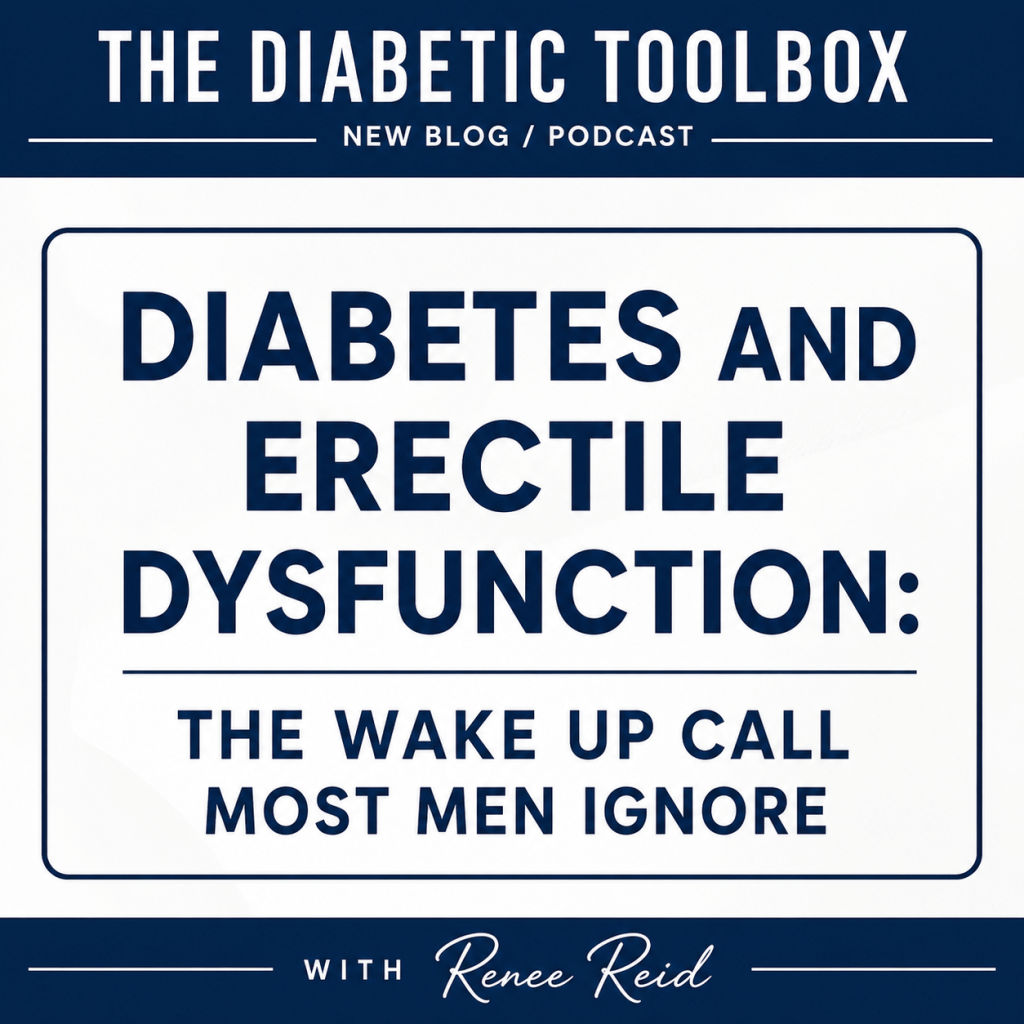
Listen to the latest episode of The Diabetic Toolbox: Diabetes and Erectile Dysfunction: The Wake Up Call Most Men Ignore
When ED Is Treated as Separate Instead of a Signal
Hello everyone, and welcome to The Diabetic Toolbox, where we are on a mission to end type 2 diabetes one family at a time through education, support, and empowerment. If this is our first time meeting, my name is Renee. I am an emotional eating and diabetes lifestyle coach and yoga teacher, and I help folks over 40 diagnosed with prediabetes or type two diabetes lower their blood sugar, lose weight, and increase mobility without starving themselves or spending hours a day in the gym.
Today is part two of the Men’s Diabetes Blueprint series, and we are talking about something I never thought we would discuss here, but that is the reality of diabetes. It touches every part of your physical and emotional health. Today we are talking about erectile dysfunction. For many men, ED feels like a private issue, something to quietly manage or avoid talking about. It is often treated as a performance issue or simply a part of getting older. But what many do not realize is that ED is often one of the earliest warning signs that something deeper is going on in the body, especially when it comes to blood sugar and heart health.
What Your Body Is Trying to Tell You
Here is where this becomes important. Erections rely on healthy blood flow and strong nerve function. When blood sugar stays elevated over time, it begins to damage both. The blood vessels become less flexible, and circulation is reduced. At the same time, nerve pathways that send signals between the brain and the body can be affected. This combination makes it harder for the body to respond the way it once did.
Tired of watching your blood sugar stay high, struggling with cravings, low energy, emotional eating, and feeling frustrated every time you try to figure out what to eat? My 4 Week Emotional Eating and Blood Sugar Reset was created to help you lower your numbers, lose weight, and feel more in control of your health with a simple, realistic plan that fits your everyday life. Click this link to join us; only 20 spots are available.
What makes this even more serious is that these same blood vessels are connected to your heart. The vessels in the penis are smaller than those in the heart, which means symptoms often show up there first. In many cases, erectile dysfunction appears years before a heart event. It is not just about intimacy. It is a signal that the vascular system is under strain. And beyond the physical side, there is an emotional weight that comes with it. Confidence can take a hit. Relationships can feel strained. Conversations that should happen often get avoided, which only adds more pressure and isolation.
Understanding the Connection Between Diabetes, Blood Flow, and Nerve Health
Let’s talk about what is happening inside the body. When blood sugar remains elevated, it leads to a process that damages the lining of blood vessels. This affects how well they can expand and carry blood where it needs to go. Healthy circulation is essential for sexual function, and when that flow is disrupted, the body cannot respond as it once did.
At the same time, high blood sugar can damage nerves, a condition often referred to as diabetic neuropathy. These nerves play a key role in sensation and response. When they are not functioning properly, signals between the brain and body are weakened or delayed. This is why erectile dysfunction is not just about one system. It is the result of multiple systems being affected at once.
The important thing to understand is that this is not random. It is connected to the same factors we talked about in part one. Blood sugar levels, blood pressure, cholesterol, and even waist circumference all play a role. When those numbers are off, the body is under stress, and ED can be one of the first visible signs of that stress.
Facing the Conversation and Taking the First Step
This is your invitation to look at this differently. Not with embarrassment, but with awareness. If this is something you or someone you love is experiencing, it is worth having a conversation with a healthcare provider. It is worth looking at your numbers and understanding what your body is trying to communicate.
And if you are supporting someone through this, approach it with compassion. This is not just physical. It touches identity, confidence, and connection. Creating space for honest conversations can make a powerful difference. You do not have to have all the answers right away, but you can start by paying attention and being willing to address what is there.
So if you have been listening to this and thinking, “Okay, this makes sense, but I still do not know how to actually do this day to day,” I want you to know that is completely normal. Knowing what to do is one thing, but doing it, especially when you are dealing with cravings, habits, and a busy life, is where most people feel stuck.
And that is exactly why I created my 4-week Emotional Eating and Blood Sugar Reset. If you are over 40 and tired of trying to figure out what to eat, dealing with cravings, or watching your blood sugar stay higher than you would like, I will walk you step by step through a simple, realistic plan to help you lower your numbers, lose weight, and feel more in control of your eating without extreme diets or starting over. You can join us by clicking this link.
Listening to the Signal Before It Becomes a Crisis
Erectile dysfunction is often treated as something to fix quickly and move past, but it deserves a deeper look. It is not just about intimacy. It is often the body raising a flag, asking for attention before something more serious develops. When you understand that connection, it changes how you respond. Instead of ignoring it or feeling ashamed, you can begin to see it as an opportunity to act.
This is about more than one symptom. It is about your heart, your circulation, your energy, and your long-term health. It is about being present in your relationships and feeling confident in your body again. The earlier you pay attention to these signals, the more options you have to support your health in a meaningful way.
As we continue through this series, we are going to keep building on this foundation and talk about what you can do to support your body through food, movement, and daily habits that fit your life.
And if this episode helped you, send it to someone who is struggling with their blood sugar too. I promise they will thank you for it.
Until next time, take care of yourself and each other,
With Peace and Love,
Renee
Disclaimer: The Diabetic Toolbox content is for informational and educational purposes only and is not a substitute for professional medical advice, diagnosis, or treatment. Always consult your licensed healthcare provider before making changes to your diet, medication, or fitness routine. Participation in any program, including our Yoga Audio Series, is at your own risk. Your health and safety are our top priorities, and we’re honored to walk this journey with you.

