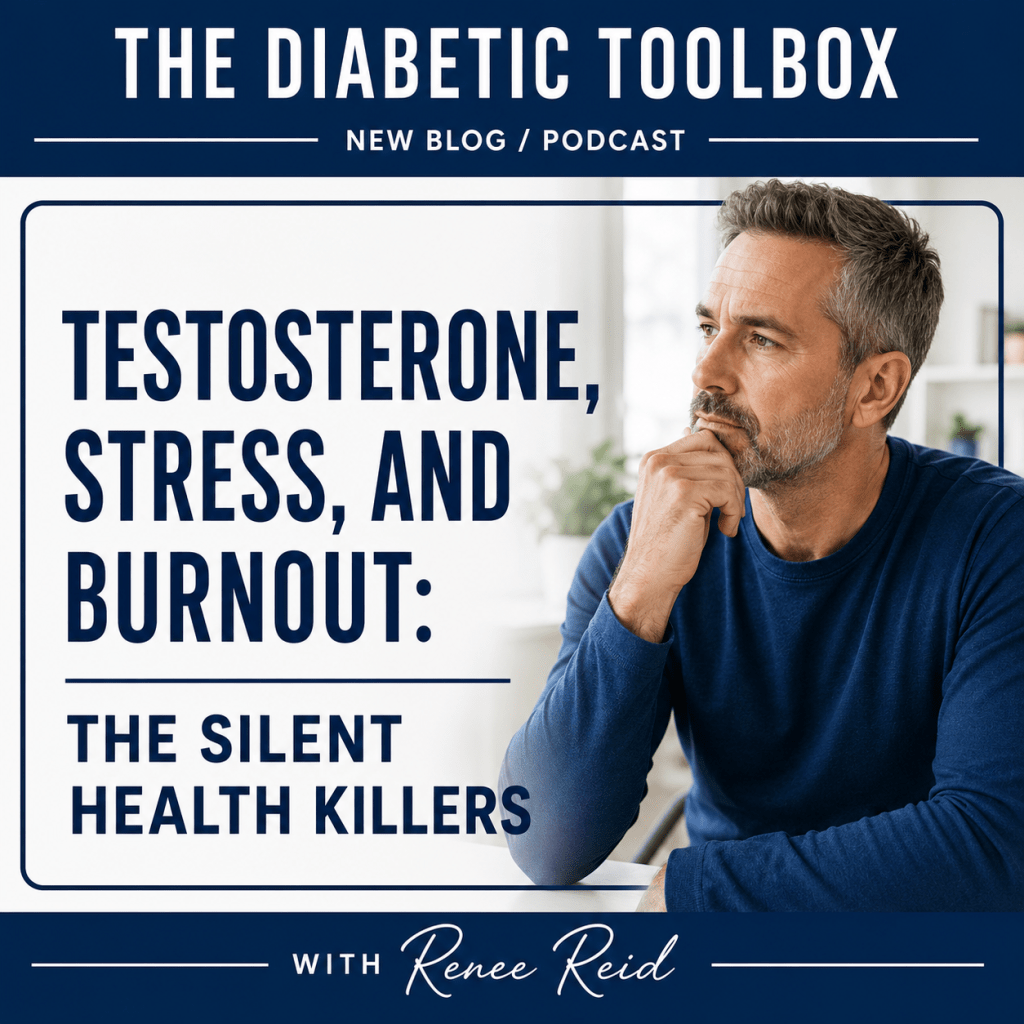
Listen to the latest episode of The Diabetic Toolbox: Testosterone, Stress, and Burnout: The Silent Health Killers
When Everything Gets Blamed on Age
Hello everyone, and welcome to The Diabetic Toolbox, where we are on a mission to end type 2 diabetes one family at a time through education, support, and empowerment. If this is our first time meeting, my name is Renee. I am an emotional eating and diabetes lifestyle coach and yoga teacher, and I help folks over 40 diagnosed with prediabetes or type two diabetes lower their blood sugar, lose weight, and increase mobility without starving themselves or spending hours a day in the gym.
Today, we are talking about testosterone, stress, and burnout. And the one thing I hope you take from this conversation is this. We must stop blaming everything on aging. Yes, the body changes over time. Energy may not feel the same as it did years ago. But low energy, low drive, and low libido are not things you have to simply accept. Too often, men are told that feeling tired, disconnected, or mentally drained is just part of getting older. That belief can keep people from asking deeper questions about what is really happening inside their bodies.
The Hidden Impact of Stress and Hormones
Let’s talk about what this looks like in real life. You wake up tired even after a full night of sleep. Your motivation is not where it used to be. Work feels heavier. Your patience is shorter. You may notice changes in your mood, your focus, and even your relationships. And for many men, there is also a shift in libido and overall drive.
What often gets missed is how connected all of this is. Chronic stress plays a major role here. When the body is under constant pressure, it produces more cortisol, which is your primary stress hormone. Elevated cortisol levels can raise blood sugar and make it harder for your body to use insulin effectively. Over time, this contributes to insulin resistance. At the same time, high stress can lower testosterone levels. So now you have a situation where blood sugar is rising, energy is dropping, and motivation feels harder to access. It becomes a cycle that feeds into itself, and many men are stuck in it without realizing what is driving it.
Understanding Testosterone, Blood Sugar, and Burnout
Let’s break this down in a way that makes sense. Testosterone is not just about physical strength or sexual health. It plays a role in energy, mood, muscle mass, and overall vitality. When testosterone levels decline, men often experience fatigue, reduced motivation, and changes in body composition, including increased belly fat. That increase in abdominal fat is closely linked to insulin resistance and higher blood sugar levels.
Now layer stress on top of that. When cortisol stays elevated for long periods of time, it signals the body to release more glucose into the bloodstream. This was helpful in short bursts when the body needed quick energy, but in a modern lifestyle where stress is constant, it keeps blood sugar levels higher than they should be. Over time, this combination of lower testosterone and higher cortisol can impact mental health as well. It can feel harder to focus, harder to stay motivated, and harder to feel connected to the things that once brought energy and purpose.
This is not just physical. It is emotional and mental. Burnout is real, and it does not happen overnight. It builds slowly when the body and mind are under continuous strain without enough support.
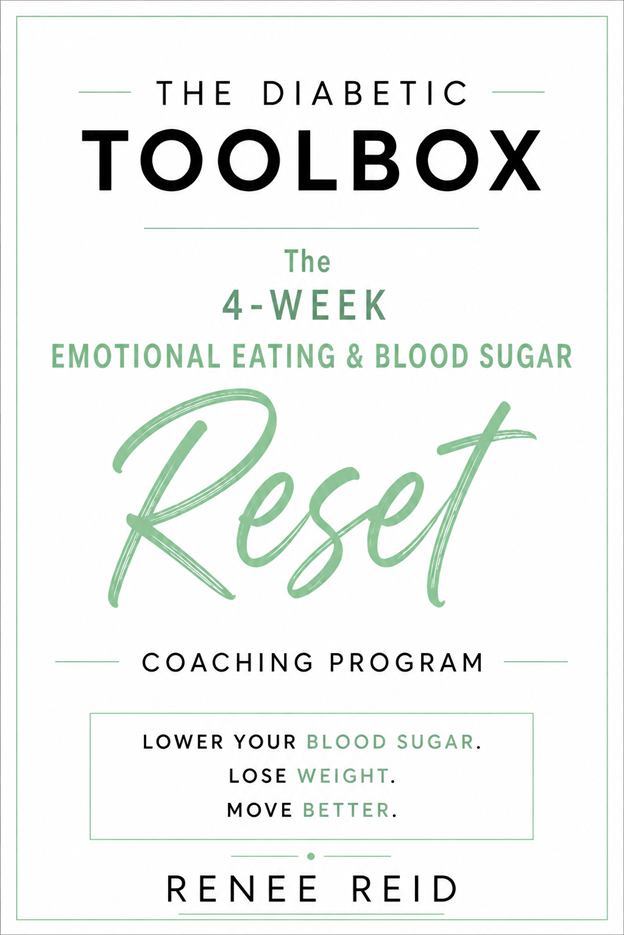
If you’re overwhelmed and unsure where to start with your blood sugar, you’re not alone, and that’s exactly why I created my 4-Week Emotional Eating and Blood Sugar Reset.
Knowing what to do is one thing, but doing it consistently while managing cravings, stress, and a busy life is where most people struggle.
If you’re over 40 and tired of guessing what to eat or watching your blood sugar go higher and higher. I’ll help you follow a simple, realistic step-by-step plan to lower your numbers, lose weight, and feel back in control, without extreme diets or starting over every week. Click this link for more information and to grab your spot. Only 20 spots available.
Reclaiming Energy, Focus, and Control
This is your invitation to look at your health through a wider lens. If you have been feeling drained, unmotivated, or disconnected, it is worth paying attention. This is not about pushing harder. It is about understanding what your body needs and responding to it with care.
Start by checking in with your daily habits. Are you getting enough rest? Are you fueling your body with balanced meals? Are you creating space to manage stress, even in simple ways like walking, breathing exercises, or stepping away from constant pressure? These are not extras. They are part of how you support your hormones and your overall health.
And if you are supporting someone through this, remember that what you see on the surface is only part of the picture. Patience, understanding, and open conversation can go a long way in helping someone feel seen and supported.
So if you have been listening to this and thinking, “Okay… this makes sense, but I still do not know how to actually do this day to day,” I want you to know that is completely normal. Knowing what to do is one thing, but doing it, especially when you are dealing with cravings, habits, and a busy life, is where most people get stuck.
And that is exactly why I created my 4-week Emotional Eating and Blood Sugar Reset. If you are over 40 and tired of trying to figure out what to eat, dealing with cravings, or watching your blood sugar stay higher than you would like, I will walk you step by step through a simple, realistic plan to help you lower your numbers, lose weight, and feel more in control of your eating without extreme diets or starting over. You can join us through the link in the show notes.
This Is About More Than Energy, It Is About Your Life
Testosterone, stress, and burnout are often treated as separate issues, but they are deeply connected. When you understand how they influence blood sugar, energy, and mental health, it changes how you approach your daily life. This is not about accepting decline. It is about recognizing the signals your body is sending and choosing to respond with intention.
Low energy, low drive, and low libido are not just signs of getting older. They are messages. And when you listen to those messages, you allow yourself to rebuild strength, restore balance, and reconnect with your life in a meaningful way.
As we continue this series, we will keep building on this foundation and give you practical tools to support your body, your mind, and your long-term health.
And if this episode helped you, send it to someone who is struggling with their blood sugar, too. I promise they will thank you for it.
Until next time, take care of yourself and each other,
With Peace and Love,
Renee
Disclaimer: The Diabetic Toolbox content is for informational and educational purposes only and is not a substitute for professional medical advice, diagnosis, or treatment. Always consult your licensed healthcare provider before making changes to your diet, medication, or fitness routine. Participation in any program, including our Yoga Audio Series, is at your own risk. Your health and safety are our top priorities, and we’re honored to walk this journey with you.

