Hello everyone, and welcome to The Diabetic Toolbox, where we are on a mission to end type 2 diabetes one family at a time through education, support, and empowerment.
If this is our first time meeting, my name is Renee. I am an emotional eating and diabetes lifestyle coach and yoga teacher. I help adults over 40 with prediabetes or type 2 diabetes lower their blood sugar, lose weight, and improve mobility without extreme dieting or spending hours in the gym.
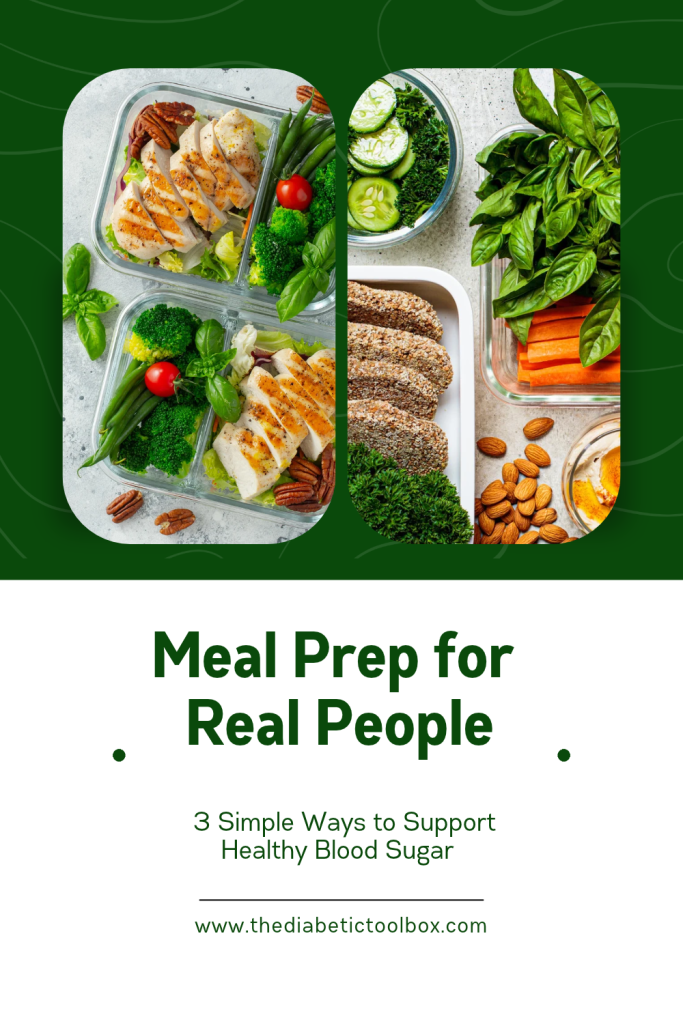
Today, we’re talking about meal prepping for real people and how a little preparation can help you support healthy blood sugar without spending all day in the kitchen. Now, let me tell you something about myself. I actually like meal prepping. I know, I know, not everybody feels that way, but hear me out.
Meal prepping helps me save time, reduces the decision fatigue of figuring out what I’m going to eat every day, and saves me money. That last one is especially important because, let me tell you, I am the queen of food delivery! There is something about being able to pick up my phone, order what I want, and have somebody bring it right to my door. The convenience is wonderful, but the cost adds up quickly. Depending on what I’m ordering, those meals are not always the best choices for supporting my blood sugar, either.
Meal prepping helps me make better choices before I’m hungry, tired, or tempted to order something simply because it’s convenient. Here’s the thing, though. I also understand why some people don’t like meal prepping. I’ve heard folks say, “Renee, I don’t have time to spend my whole Sunday cooking.” Others tell me, “Healthy groceries are too expensive.” Then there are the people who say, “I don’t like eating leftovers.” I hear you!
Meal prepping is one of those wellness tools we love to hate. We know it’s good for us, but we don’t always love the work we think it comes with. If you’ve ever thought of meal prepping as another chore you’d rather do without, this three-part series is for you. We’ll talk about making healthy eating work for your actual life, especially during the busy holiday season, when schedules are full, food is everywhere, and the last thing most of us want is another complicated task on our to-do list.
Why Meal Prepping Matters When You’re Managing Blood Sugar
When you’re living with prediabetes or type 2 diabetes, what you eat matters, but so does how you prepare yourself to make food choices. Think about what happens after a long day. You’re tired, you’re hungry, and you open the refrigerator only to find nothing ready to eat.
What happens next? You pull out your phone, and before you know it, dinner is on its way from your favorite restaurant. There’s nothing wrong with enjoying takeout. The challenge comes when convenience becomes the only thing guiding our food choices. Restaurant meals can contain larger portions of carbohydrates, added sugars, sodium, or saturated fat than we realize. That doesn’t mean you can never order food again. It means having a few ready-to-eat options at home gives you more choices.
Meal prepping can help in three important ways. First, it saves time and reduces decision fatigue. When you already know what you’re eating, you don’t have to decide again after a busy day. Second, it can save money. Preparing a few meals at home, using affordable ingredients, and reducing food waste can help you spend less on last-minute food purchases. Third, it makes balanced eating easier. When vegetables, protein, and fiber-rich carbohydrates are available, it’s easier to put together meals that support steadier blood sugar.
During the holidays, this becomes even more important. Between shopping, family gatherings, traveling, and preparing holiday meals, our usual routines can disappear quickly. The good news is that you don’t need an elaborate meal plan to stay connected to your healthy eating habits. You need a little preparation and a willingness to make things easier for yourself.
3 Simple Meal Prep Tips That Work in Real Life
1. Prep Ingredients Instead of Cooking Every Meal
One of the biggest misconceptions about meal prepping is that you have to cook breakfast, lunch, and dinner for the entire week. Who wants to spend six hours in the kitchen on Sunday? Not me!
Instead of preparing every meal, try preparing a few ingredients that you can use in different ways. For example, bake some chicken, roast a tray of vegetables, prepare a pot of brown rice or quinoa, and wash your salad greens. Now you’ve got the beginnings of several meals without eating the exact same thing every day.
On Monday, add that chicken to a salad. On Tuesday, you can use it in a whole-grain wrap with vegetables. On Wednesday, serve it alongside roasted vegetables and a small portion of brown rice. Same ingredients, different meals.
You can do this during the holiday season, too. If you’re roasting vegetables for Thanksgiving or another family gathering, prepare a little extra to use in meals later in the week. If you’re cooking turkey, refrigerate or freeze the leftovers promptly so you can use them in soups, salads, or wraps.
The easiest way to eat healthier is simply to make the healthy choice more convenient. Remember, meal prepping doesn’t mean eating the same meal five days in a row. It means giving yourself ingredients that make putting meals together easier.
2. Keep Meal Prepping Affordable and Simple
Let’s talk about money because healthy eating has developed a reputation for being expensive. Somewhere along the way, people started believing that eating healthy means buying organic everything, shopping at specialty grocery stores, and filling their carts with expensive foods they’ve never tried before. That is simply not true.
You can build balanced meals with everyday ingredients such as eggs, canned beans, frozen vegetables, oats, brown rice, canned tuna, plain yogurt, and chicken. Frozen vegetables are one of my favorite examples because they’re convenient, last longer than fresh produce, and can be just as nutritious.
Canned beans are another affordable option. They provide fiber and plant-based protein, which can help make meals more satisfying. Just remember that beans also contain carbohydrates, so portions still matter when you’re managing blood sugar. Before heading to the grocery store, take a few minutes to check your refrigerator, freezer, and pantry. You may already have the ingredients for several meals.
During the holidays, look for ways to use foods you’re already purchasing instead of buying a completely separate set of groceries for your healthy eating routine. I am raising my hand because I have been guilty of doing this. But sweet potatoes can be part of your holiday dinner and served with eggs or another protein at breakfast later in the week. Leftover vegetables can become part of an omelet, soup, or quick lunch. The goal isn’t to buy more food. It’s to make better use of what you already have.
This approach works just as well in January and February when holiday spending is behind us, and many families are looking for ways to reduce grocery expenses. Healthy eating doesn’t have to be fancy to be effective. Checking your pantry and refrigerator before you shop is a great tip; I used it just yesterday while ordering my food for Thanksgiving. I kept wondering why my bill was so high because I was buying duplicates of items I already had.
3. Create a Backup Plan for the Days When Life Happens
Now, this is the tip I really want you to remember. Prepare for the days when things don’t go according to plan. Because those days are coming! You may intend to cook dinner, but work runs late, you’re stuck in traffic, the grandchildren need something, or you’re simply too tired to stand in the kitchen. That’s real life.
When we first start our wellness journey, we intend to cook and prep food every day. Instead of expecting yourself to cook every single day, create a few backup meals that require little effort. I like to keep frozen vegetables, canned salmon or tuna, eggs, and microwaveable brown rice available. You can put together a balanced meal in minutes.
A simple dinner could be rotisserie chicken, steamed broccoli, and a small serving of sweet potato. Another option is scrambled eggs with spinach, a slice of whole-grain toast, and a little avocado. You can also freeze portions of homemade soup or chili for evenings when cooking is the last thing on your mind. These meals don’t require hours of preparation, and they give you an alternative to ordering food every time you’re tired.
During the holiday season, having backup meals is especially helpful. If you know you’re attending a holiday party in the evening, you can still enjoy a balanced breakfast and lunch instead of skipping meals to save room for later.
Skipping meals can leave you overly hungry, and for some people taking diabetes medications, it can also increase the risk of low blood sugar. Follow your healthcare team’s guidance about meal timing and medication. Sometimes having a simple meal available is enough to keep one busy day from turning into several days of feeling disconnected from your eating routine.
One Simple Action You Can Take Today
Try something this week. Choose just one meal to make easier. Not your entire week, just one meal. If mornings are hectic, prepare two or three breakfasts ahead of time. Overnight oats with chia seeds and berries, paired with a protein source, can be a convenient option.
If you usually order delivery at lunchtime, prepare ingredients for two lunches. If evenings are your biggest challenge, make one extra serving of dinner and freeze it for another day. Start with the meal that stresses you out most or leads to the most last-minute decisions.
Notice how you feel when that meal is already taken care of. Do you feel less rushed? Are you spending less money? Do you feel more satisfied after eating? These are important things to notice because supporting your health involves more than watching a number on your glucose meter.
Healthy Eating Should Fit Your Life, Not Take It Over
Healthy eating should fit your life, not take it over, especially as we move through the holidays and into a new year. You don’t have to spend your entire weekend cooking to eat well. You don’t have to buy expensive groceries, follow a rigid meal plan, or give up every food you enjoy. You certainly don’t have to turn your kitchen into a meal prep assembly line.
What you need is a routine that supports the life you’re actually living. That means preparing ingredients for several meals. Or cooking extra food and freezing a portion. Keep it simple, and keep a few simple foods on hand so you can put dinner together in ten minutes.
The best meal prep routine is one you’re willing and able to use consistently. When January arrives, you won’t need to start an entirely new eating plan. You can continue building on the habits you’ve already practiced.
When February gets busy, those same habits can help you stay prepared. That’s how we create healthy routines that last beyond the holidays, beyond New Year’s resolutions, and throughout the year.
Join Me Tomorrow: Healthy Meal Delivery Services for Prediabetes and Type 2 Diabetes: How to Choose the Right
Tomorrow, we’re continuing this three-part series with an important conversation titled “Healthy Meal Delivery Services for Prediabetes and Type 2 Diabetes: How to Choose the Right Meal Delivery Service.” We’ll explore popular meal kits and ready-made meal services, including HelloFresh, Factor, and other options. Learn how to compare convenience, nutrition, cost, and flexibility.
Not Sure What to Eat After a Prediabetes Diagnosis?
Download the FREE What Am I Supposed to Eat Now? Starter Cookbook, created for people with prediabetes or type 2 diabetes who are ready to eat differently but aren’t sure where to begin. You’ll receive the 14-Day Whole Food Starter Guide, including 7 breakfasts, 7 lunches, 7 dinners, 7 snacks, a simple shopping list, meal-building tips, and a 14-day tracker.
No complicated meal plan. No separate meals for your family. Just simple, everyday food and practical guidance to help you answer: What am I supposed to eat now?
Download the FREE Starter Cookbook and start with your next meal.
Remember, change happens one habit, one choice, one day at a time.
Please share this post with someone you love, and until next time, take good care of yourself.
With Peace & Love,
Renee

