Hello, my friend, and welcome to The Diabetic Toolbox, where we are on a mission to end Type 2 diabetes, one family at a time, through education, support, and empowerment. If this is our first time meeting, my name is Renee. I am an emotional eating and diabetes lifestyle coach and yoga teacher. Today, we are talking about why sleep has to be part of your diabetes care, what can happen when you consistently don’t get enough, and some simple ways to start improving it. But first, quick question: How did you sleep last night?
For much of this year, my sleep has been awful. When I started noticing changes in my weight and blood sugar, I realized I couldn’t talk about food and exercise without talking about sleep. Poor sleep may have been one of several things contributing to what I was experiencing. But it wasn’t simply that I wasn’t getting enough hours. It was what being tired meant for the rest of my day.
When I’m exhausted, I’m not necessarily thinking about preparing the balanced meal I planned. I’m thinking about what is quick. I’m craving energy, which might mean another cup of coffee with plenty of cream and sugar. Something sweet can suddenly sound really good in the afternoon. And that walk I promised myself I would take after dinner becomes much easier to postpone when all I want to do is sit down. If this sounds familiar, I want you to understand something important. Sleep isn’t something separate from your wellness plan. It is part of it.
What Happens When You Don’t Get Enough Sleep?
Sleep gives your body time to do important work, and consistently getting too little can affect glucose metabolism, insulin sensitivity, appetite regulation, stress hormones, mood, energy, and decision-making. That means a night of poor sleep can carry into the next day’s choices. Think about it. You wake up exhausted, so moving your body is harder. Your appetite may feel different, and highly palatable foods can become much more appealing. You may rely on caffeine or sugary foods to help you stay alert. You’re tired by the end of the workday, so cooking and exercising feel like two more things on an already long list.
Then bedtime comes, but maybe you’re scrolling through your phone, thinking about tomorrow, answering one last email, watching one more episode, or simply unable to settle your mind. Before you know it, you’re beginning another day without enough rest. For adults, the general recommendation is at least seven hours of sleep each night, although individual needs vary.
If you’re regularly giving yourself enough time to sleep but still waking exhausted, snoring heavily, waking frequently, or struggling with ongoing insomnia, don’t assume you simply need a better bedtime routine. Those can be reasons to talk with your healthcare provider because conditions such as sleep apnea can interfere with sleep and are important to address.
How Do We Start Sleeping Better?
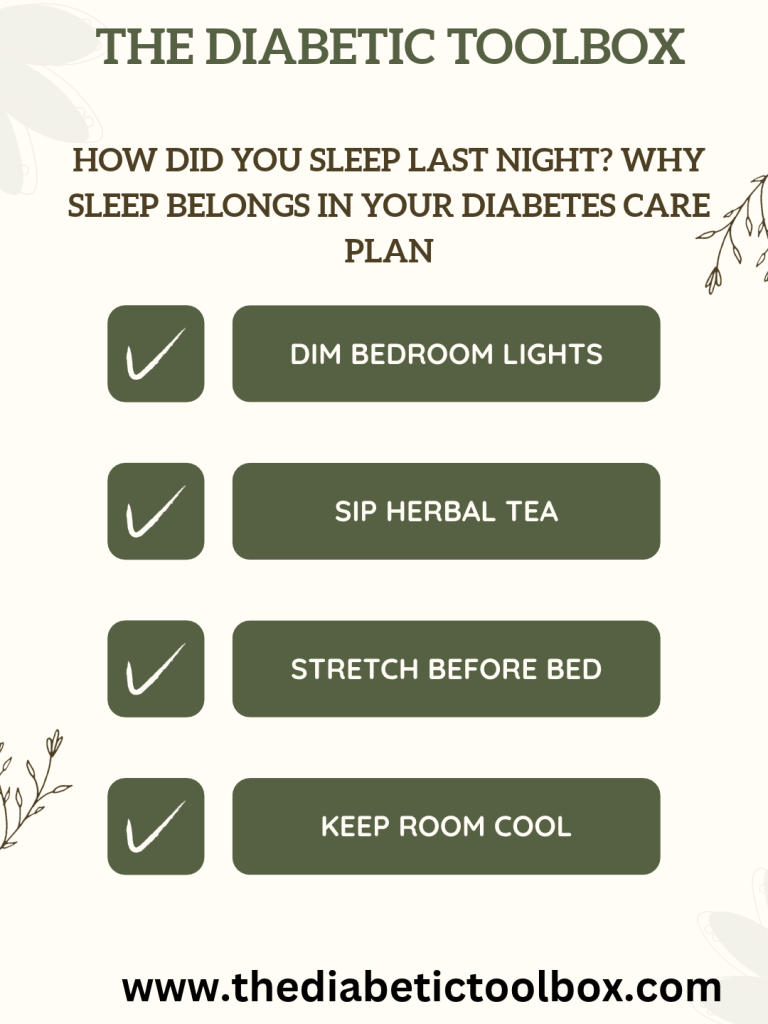
I don’t want you to finish reading this and decide that tonight you’re going to create the world’s most elaborate nighttime routine. Start smaller. Try going to bed and waking up around the same time each day. Give yourself a period before bed when work is finished, and the phone gets put away. Make your bedroom as dark, comfortable, and restful as you reasonably can. Pay attention to whether late-day caffeine is affecting you. You could try a few minutes of gentle stretching, slow breathing, prayer, journaling, reading, or another activity that signals the day is ending. And here’s something else to consider: your walking routine can be part of the larger picture too.
Regular physical activity can support better sleep, and a short walk can be a realistic way to begin becoming more active. That’s one reason I created my 30-Day Walking & Blood Sugar Challenge. We’re not looking at blood sugar as though one magical food or one exercise fixes everything. We’re building habits around movement, food, strength, stretching, and support that work together. So tonight, instead of asking yourself what else you need to accomplish before bed, maybe ask a different question: What would help me get the rest I need tonight?
Thank you so much for spending a few minutes with me today. Let us know in the comments: How many hours of sleep are you actually getting most nights, and what is one thing that regularly gets in the way of getting more?
Where could your blood sugar be in 30 days? Ready to take the next step? Join my 30-Day Walking & Blood Sugar Challenge. Inside, you’ll receive a progressive walking plan, a 14-day Mediterranean-style meal plan, pre- and post-walk stretches, my weight-training guide, private community support, and direct access to me for encouragement along the way.
Click below to learn more and join us.
Remember, change happens one habit, one choice, one day at a time.
Until next time, take care of yourself and each other.
With Peace & Love,
Renee
More Resources From The Diabetic Toolbox
The Diabetic Toolbox Podcast
Prefer to listen? Join Renee on The Diabetic Toolbox Podcast for practical, honest conversations about managing prediabetes and type 2 diabetes in everyday life. Each episode explores topics such as blood sugar management, emotional eating, movement, healthy habits, weight loss, mobility, and building a lifestyle that supports your health without extreme diets or hours in the gym. Explore previous episodes wherever you listen to podcasts.
Not Sure What to Eat After a Prediabetes Diagnosis?
Download the FREE What Am I Supposed to Eat Now? Starter Cookbook, created for people with prediabetes or type 2 diabetes who are ready to eat differently but aren’t sure where to begin. You’ll receive the 14-Day Whole Food Starter Guide, including 7 breakfasts, 7 lunches, 7 dinners, 7 snacks, a simple shopping list, meal-building tips, and a 14-day tracker.
No complicated meal plan. No separate meals for your family. Just simple, everyday food and practical guidance to help you answer: What am I supposed to eat now? Download the FREE Starter Cookbook and start with your next meal.
Reference Guide: Starting Your Movement Plan
Want something you can save and use when you’re ready to exercise? Download the companion reference guide, Starting Your Movement Plan: Yes, It Might Hurt, But This Will Help. This simple guide gives you practical reminders for preparing your body before movement, paying attention to how you feel while exercising, caring for your body afterward, and choosing an appropriate place to begin.
Disclaimer
The Diabetic Toolbox content is for informational and educational purposes only and is not a substitute for professional medical advice, diagnosis, or treatment. Always consult your licensed healthcare provider before changing your diet, medication, or fitness routine. Participation in any program, including our Yoga Audio Series, is at your own risk. Your health and safety are our top priorities, and we’re honored to walk this journey with you.

