Listen to the latest episode of The Diabetic Toolbox Podcast:
Hello everyone, and welcome to The Diabetic Toolbox, where we are on a mission to end type 2 diabetes one family at a time through education, support, and empowerment.
If this is our first time meeting, my name is Renee. I am an emotional eating and diabetes lifestyle coach and yoga teacher. I help adults over 40 with prediabetes or type 2 diabetes lower their blood sugar, lose weight, and improve mobility without extreme dieting or spending hours in the gym.
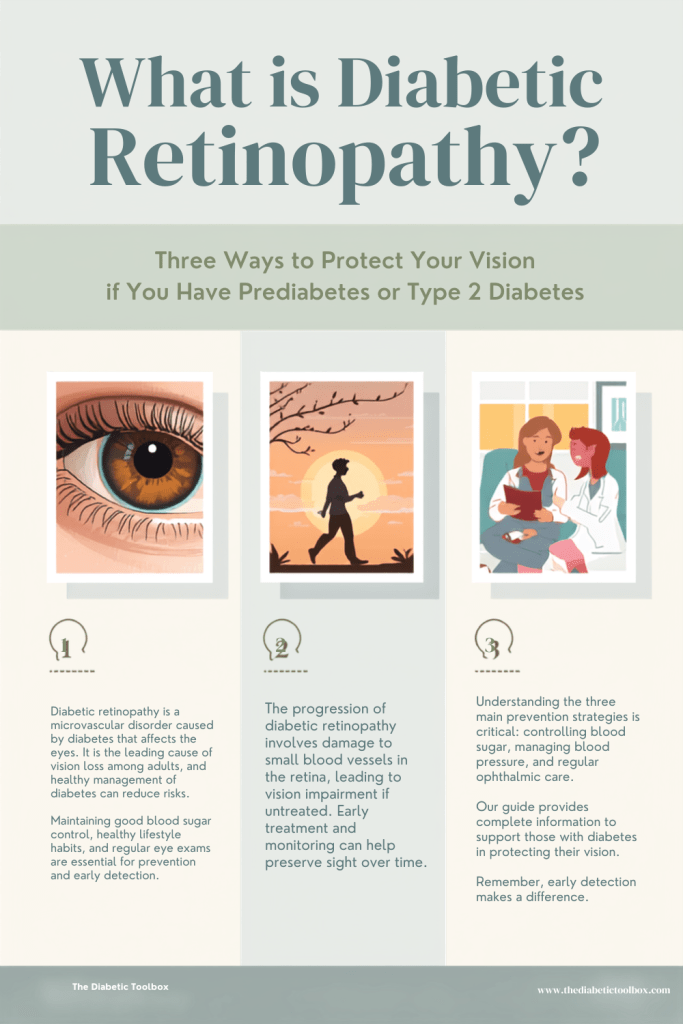
Today, we’re talking about diabetic retinopathy, what it is, how it develops, and three simple ways you can help protect your vision if you’ve been diagnosed with prediabetes or type 2 diabetes.
When people think about diabetes, they often think about blood sugar, medications, or what they should eat. Eye health is not always at the top of the list, but it should be. Your eyesight is something you rely on every single day, and diabetes can affect your eyes long before you notice any changes in your vision.
Diabetic retinopathy is one of the most common diabetes related eye conditions. It develops when high blood sugar damages the tiny blood vessels in the retina, which is the light-sensitive tissue at the back of your eye. Over time, these blood vessels can weaken, leak fluid, or become blocked. As the condition progresses, new fragile blood vessels may form, increasing the risk of bleeding, scarring, and vision loss.
One of the most challenging things about diabetic retinopathy is that it often has no symptoms in its early stages. You may feel that your vision is perfectly normal while changes are quietly taking place inside your eyes. That is why routine eye care is so important for anyone living with prediabetes or type 2 diabetes.
The good news is that there are practical steps you can take to help reduce your risk and protect your eyesight.
1. Keep Your Blood Sugar as Stable as Possible
No one has perfect blood sugar every day, and that’s okay. The goal is progress, not perfection. Consistently working toward healthy blood sugar levels can reduce stress on the tiny blood vessels throughout your body, including those in your eyes. Small habits like eating balanced meals, staying active, taking medications as prescribed, and monitoring your blood sugar can make a meaningful difference over time.
2. Schedule Your Annual Diabetic Eye Exam
Even if you can see clearly, an annual comprehensive dilated eye exam is one of the best investments you can make in your long-term health. These exams allow your eye care provider to detect changes before they begin affecting your vision. Early detection often leads to more treatment options and better outcomes.
If it has been more than a year since your last exam, consider making that appointment today.
3. Pay Attention to Changes in Your Vision
Do not ignore symptoms such as blurry vision, difficulty seeing at night, an increase in floaters, flashes of light, or dark areas in your field of vision. While these symptoms do not always mean diabetic retinopathy, they should never be ignored. Contact your healthcare provider or eye care professional promptly if you notice any sudden changes.
Taking care of your eyes is just as important as taking care of your heart, kidneys, or feet. Protecting your vision is part of protecting your independence and your quality of life. The earlier you begin paying attention to your eye health, the better your chances of preventing serious complications in the future.
Your Next Step
To help you prepare for your next appointment, I created The Diabetic Toolbox: 5 Questions to Ask at Your Next Diabetic Eye Exam. Inside, you’ll learn the questions to ask, what warning signs to watch for, and how to become a stronger advocate for your long-term eye health.
Whether you’ve recently been diagnosed with prediabetes or you’ve been managing type 2 diabetes for years, this guide will help you walk into your next appointment feeling informed, confident, and prepared.
Download The Diabetic Toolbox: 5 Questions to Ask at Your Next Diabetic Eye Exam today and take an important step toward protecting your vision for years to come.
Please share this post with someone you love, until next time take care of yourself and each other,
With Peace & Love,
Renee
Disclaimer: The Diabetic Toolbox content is for informational and educational purposes only and is not a substitute for professional medical advice, diagnosis, or treatment. Always consult your licensed healthcare provider before making changes to your diet, medication, or fitness routine. Participation in any program, including our Yoga Audio Series, is at your own risk. Your health and safety are our top priorities, and we are honored to walk this journey with you.

