
Hello everyone, and welcome to The Diabetic Toolbox, where we are on a mission to end type 2 diabetes one family at a time through education, support, and empowerment.
If this is our first time meeting, my name is Renee. I am an emotional eating and diabetes lifestyle coach and yoga teacher, and I help folks over 40 diagnosed with prediabetes or type 2 diabetes lower their blood sugar, lose weight, and increase mobility without starving themselves or spending hours a day in the gym.
Today, we’re talking about diabetes foot care and why taking care of your feet may be one of the most overlooked parts of managing your health.
When Your Feet Are Easy to Ignore
Let’s be honest. Most of us do not spend a lot of time thinking about our feet.
We notice them when our shoes hurt, when we stub a toe on the coffee table, or when we finally sit down at the end of a long day and kick our shoes off with relief.
But when you are living with prediabetes or type 2 diabetes, your feet deserve a little more attention.
The truth is that your feet often tell a story about your circulation, nerve health, balance, and mobility. The challenge is that many foot problems develop gradually. You may not notice a change until it becomes uncomfortable or difficult to manage.
That is why foot care is about far more than appearances. It is about protecting your independence, staying active, and catching problems before they become serious.
The Hidden Cost of Neglecting Foot Health
Many people are surprised to learn that elevated blood sugar can affect the nerves and blood vessels in the feet.
Imagine stepping on something sharp and barely feeling it. Or developing a blister that takes much longer to heal than expected. These situations can happen when circulation is reduced or nerve sensitivity changes.
I have talked with people who avoided looking at their feet because they assumed everything was fine. Then one day, they noticed a sore, swelling, or skin change that had been there longer than they realized.
That can feel frightening.
The good news is that daily awareness and movement can support healthy circulation and help you stay connected to what your body is telling you.
Your feet carry you through every grocery trip, every family gathering, every walk with the dog, and every adventure you still want to experience. They deserve your attention.
How Standing Yoga Supports Foot Health
One of my favorite ways to support foot health is through standing yoga.
Now, before you picture yourself twisted into a pretzel, let me reassure you. Standing yoga can be simple, practical, and accessible.
Standing poses encourage blood flow to the lower body while improving balance, stability, and leg strength.
Here are four beginner-friendly poses you can practice at home:
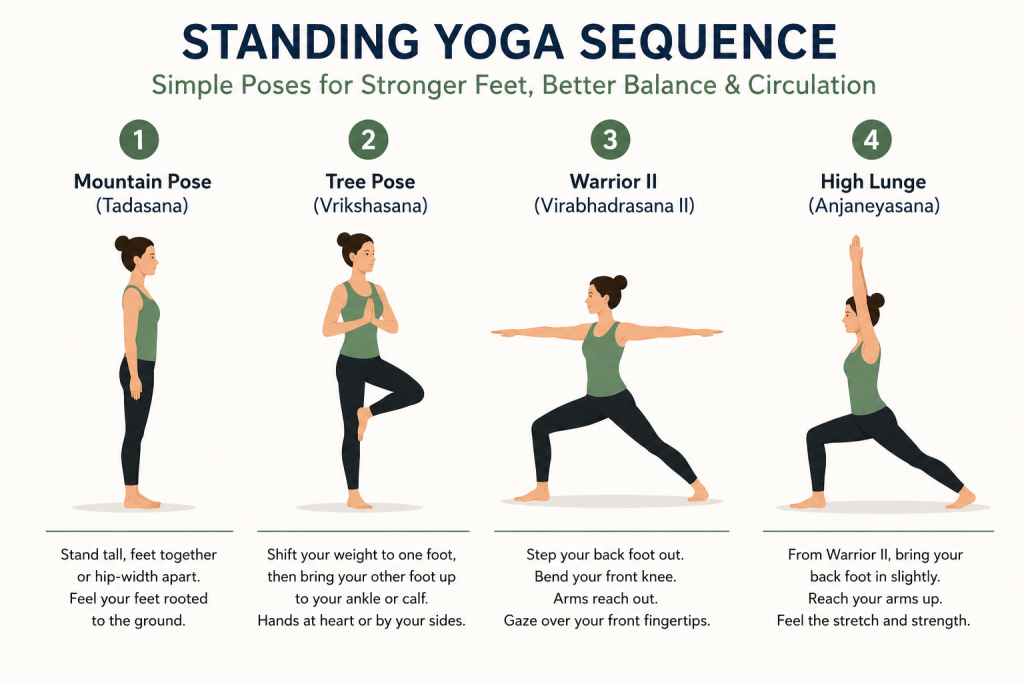
Mountain Pose
Stand tall with your feet firmly planted on the floor.
Feel the weight distributed evenly through both feet.
Take a slow breath in and a slow breath out.
This pose helps you become aware of your posture and teaches you how your feet connect with the ground.
Tree Pose
Shift your weight into one foot.
Place the opposite foot against your ankle or calf and bring your hands together.
This pose challenges balance and strengthens the muscles that help keep you steady during everyday activities.
Chair Pose
Bend your knees slightly as though you are about to sit in a chair.
Reach your arms forward or overhead.
This pose strengthens the legs and helps build support around the knees and ankles.
High Lunge
Step one foot back and bend the front knee.
Lift your chest and reach upward.
This movement helps improve circulation while building strength throughout the lower body.
Even a few minutes of these poses can leave you feeling more connected, grounded, and confident in your movement.
Foot Care Is a Daily Act of Self-Respect
Foot care does not have to be complicated.
A few minutes each day can make a meaningful difference.
Take a look at your feet.
Check for cuts, redness, swelling, blisters, or changes in the skin.
Keep your skin moisturized.
Choose shoes that fit comfortably and support your movement.
And most importantly, keep moving.
Movement encourages circulation. Circulation supports healing. Healing supports long-term health.
Think of foot care as a conversation with your body. Each day, you are checking in and asking, “How are we doing today?”
That simple habit can help you notice concerns earlier and stay engaged in your own well-being.
One Action You Can Take Today
Before you leave this page, take two minutes to look at your feet.
Not next week.
Not when you remember.
Today.
Check your skin, wiggle your toes, and pay attention to how your feet feel.
Then stand up and practice Mountain Pose for three slow breaths.
It is a simple action, but it is a powerful reminder that caring for your health does not always require dramatic changes. Sometimes it starts by paying attention to the parts of your body that work hard for you every single day.
Starting Today
When people think about managing diabetes, they often focus on blood sugar numbers, medications, and food choices. Those things matter, but foot health deserves a place in the conversation too.
Your feet support every step you take. They help you stay active, independent, and connected to the people and experiences you love.
Standing yoga offers a gentle way to improve circulation, strengthen the lower body, and enhance balance. Combined with daily foot checks and supportive footwear, it becomes part of a practical approach to protecting your health.
The goal is not to create another task on your to-do list. The goal is to build awareness and appreciation for a part of your body that serves you every day.
Your feet have carried you this far.
They deserve a little care in return.
And before I go, I want to tell you about something special.
The July group for my Four-Week Emotional Eating and Blood Sugar Reset is now open.
This program is designed for adults with prediabetes or type 2 diabetes who are tired of feeling stuck in the cycle of cravings, emotional eating, blood sugar frustration, and starting over every Monday.
Inside the program, you’ll learn how to identify emotional eating triggers, understand your relationship with food, create blood sugar-friendly habits, manage cravings with confidence, and build a healthier lifestyle that feels realistic and sustainable.
You’ll also receive guidance, support, and practical tools that help you take what you’re learning and apply it to everyday life.
If you’ve been looking for support and a community of people walking a similar path, this may be exactly what you’ve been searching for.
All right, my friend, that is all I have for you today. Please share this post with someone you love, and until next time, take care of yourself and each other.
With Peace & Love,
Renee
Disclaimer: The Diabetic Toolbox content is for informational and educational purposes only and is not a substitute for professional medical advice, diagnosis, or treatment. Always consult your licensed healthcare provider before making changes to your diet, medication, or fitness routine. Participation in any program, including our Yoga Audio Series, is at your own risk. Your health and safety are our top priorities, and we’re honored to walk this journey with you.
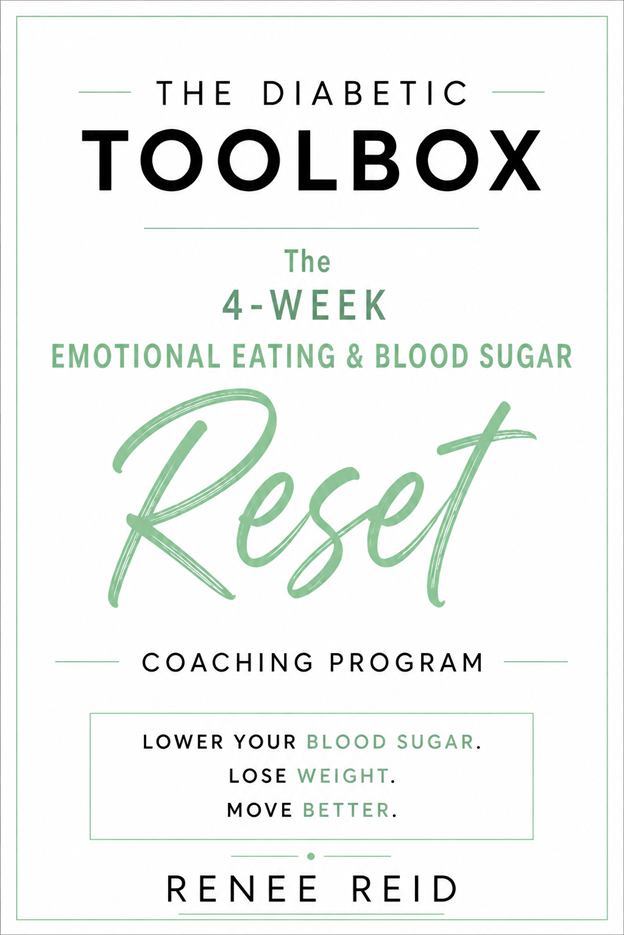
Before we wrap up, if you’re overwhelmed and unsure where to start with your blood sugar, you’re not alone, and that’s exactly why I created my 4-Week Emotional Eating and Blood Sugar Reset.
Knowing what to do is one thing, but doing it consistently while managing cravings, stress, and a busy life is where most people struggle. If you’re over 40 and tired of guessing what to eat or watching your blood sugar go higher and higher. I’ll help you follow a simple, realistic step-by-step plan to lower your numbers, lose weight, and feel back in control, without extreme diets or starting over every week. Click this link for more information and to grab your spot.

