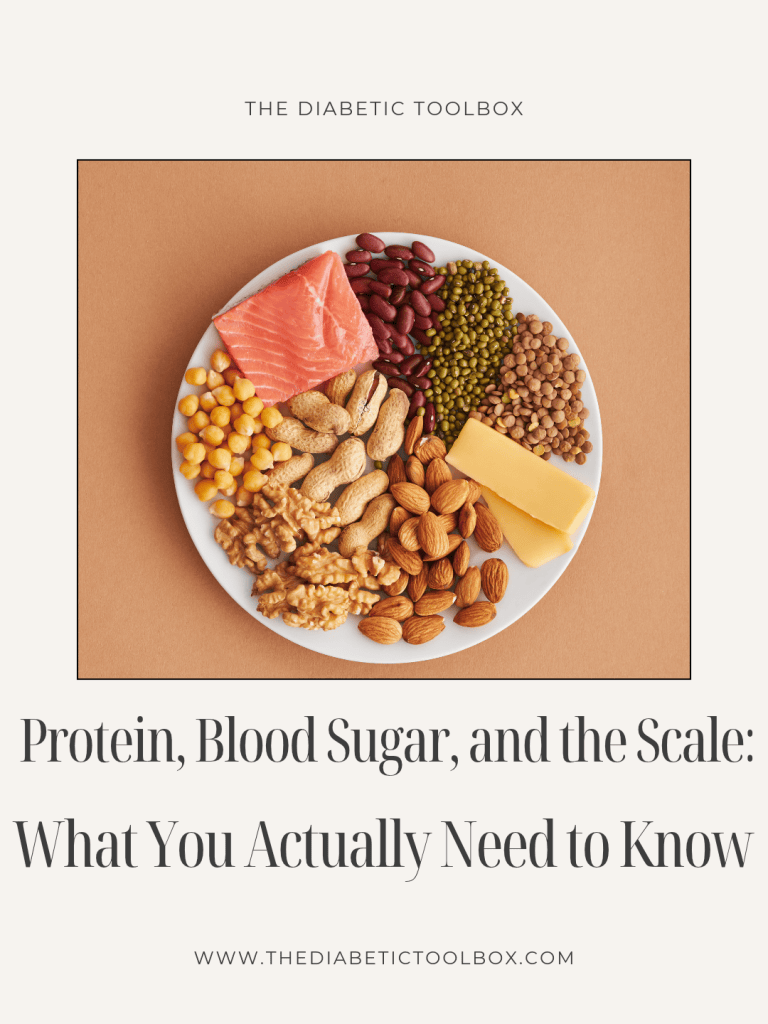
Why Are We So Confused About Protein? Hello, my friend, and welcome to The Diabetic Toolbox, where we are on a mission to end Type 2 diabetes, one family at a time, through education, support, and empowerment. If this is our first time meeting, my name is Renee. I am an emotional eating and diabetes lifestyle coach and yoga teacher.
Today, we are talking about protein, how much you may need, which foods are good sources, why protein can be helpful when you’re managing your blood sugar, and why seeing the number on the scale go up a few pounds doesn’t necessarily mean something has gone wrong.
A friend told me she started working out, lifting weights, and intentionally eating more protein because she wanted to build muscle. Then she stepped on the scale and saw that her weight had increased. That number frightened her so much that she responded by doing a three-day fast, something I would not recommend. But I understood the fear behind her reaction.
We have spent years being taught to judge what we’re doing by what happens on the scale. Then social media comes along and tells us to eat more protein, eat fewer carbohydrates, fast longer, lift heavier, drink a particular shake, or follow whatever nutrition trend is popular that week. When you’re managing prediabetes or Type 2 diabetes, you don’t need another trend. You need clear, evidence-based information you can use in everyday life.
How Much Protein Do You Actually Need?
Protein helps build and maintain muscle and other tissues, and including protein in meals can help with fullness. The basic Recommended Dietary Allowance for generally healthy adults is about 0.8 grams of protein per kilogram of body weight per day, but that is a baseline intended to meet the needs of most adults, not necessarily the ideal target for every individual. Needs can vary based on age, body size, activity level, whether you’re strength training, your overall health, and other factors.
Older adults and people doing regular resistance training may benefit from discussing higher protein needs with a registered dietitian or healthcare professional. And no, getting more protein doesn’t mean you have to live on chicken breasts and protein shakes. Fish, chicken, turkey, eggs, Greek yogurt, cottage cheese, beans, lentils, tofu, tempeh, nuts, seeds, and other foods can all contribute protein. Beans and lentils are especially interesting because they also provide fiber, although they contain carbohydrates too, so portions still matter when you’re managing blood sugar.
One simple approach is to include a protein source at each meal instead of obsessing over hitting a perfect number. Pairing protein with fiber-rich carbohydrate foods can also make meals more satisfying. If you have kidney disease or have been told to limit protein, however, talk with your healthcare team before substantially increasing your intake.
Please Don’t Let the Scale Tell the Whole Story
Now let’s talk about those extra pounds because this is where fear can send us in the wrong direction. If you start strength training and the scale increases, don’t immediately assume you’ve gained several pounds of body fat. Changes in exercise can affect how much glycogen and water your muscles store; inflammation from a new workout can temporarily increase water retention; the amount of food and fluid in your body changes throughout the day; and over time, strength training can help you build muscle.
This is why I don’t want the scale to be the only measurement you use to decide whether taking care of yourself is working. How are your clothes fitting? Are you getting stronger? Can you walk farther? Is it easier to get out of a chair? How is your energy? What are your blood sugar readings showing? What are your healthcare provider and lab results telling you? Those measurements matter too.
That’s exactly the kind of thinking behind my 30-Day Walking & Blood Sugar Challenge. We’re not trying to punish our bodies into producing a smaller number. We’re building sustainable habits around walking, food, stretching, strength training, and support that can help us take better care of ourselves.
Thank you so much for spending a few minutes with me today. Let us know in the comments: Has a number on the scale ever convinced you that something you were doing for your health wasn’t working?
Where could your blood sugar be in 30 days? Ready to take the next step? Join my 30-Day Walking & Blood Sugar Challenge. Inside, you’ll receive a progressive walking plan, a 14-day Mediterranean-style meal plan, pre- and post-walk stretches, my weight-training guide, private community support, and direct access to me for encouragement along the way.
Remember, change happens one habit, one choice, one day at a time.
Until next time, take care of yourself and each other.
With Peace & Love,
Renee
More Resources From The Diabetic Toolbox
The Diabetic Toolbox Podcast
Prefer to listen? Join Renee on The Diabetic Toolbox Podcast for practical, honest conversations about managing prediabetes and type 2 diabetes in everyday life. Each episode explores topics such as blood sugar management, emotional eating, movement, healthy habits, weight loss, mobility, and building a lifestyle that supports your health without extreme diets or hours in the gym. Explore previous episodes wherever you listen to podcasts.
Reference Guide: Starting Your Movement Plan
Want something you can save and use when you’re ready to exercise? Download the companion reference guide, Starting Your Movement Plan: Yes, It Might Hurt, But This Will Help. This simple guide gives you practical reminders for preparing your body before movement, paying attention to how you feel while exercising, caring for your body afterward, and choosing an appropriate place to begin.
Disclaimer
The Diabetic Toolbox content is for informational and educational purposes only and is not a substitute for professional medical advice, diagnosis, or treatment. Always consult your licensed healthcare provider before changing your diet, medication, or fitness routine. Participation in any program, including our Yoga Audio Series, is at your own risk. Your health and safety are our top priorities, and we’re honored to walk this journey with you.

